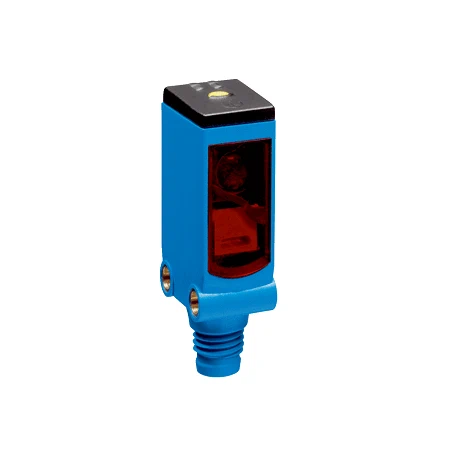
SICK 1042087 WLG4S-3V2232 PNP Glass Sensor

USD 205.14

WLG4S-3V2232 offers polarized glass detection, 0–3 m with PL80A, PNP dark switching, M8 connection and teach-in adjustment.

SKU SICK-1042087 Category
SICK W4S-3 Glass

SICK WLG4S-3V2232 Transparent-object Retro-reflective Sensor

BrandSICK
Model IdentifierWLG4S-3V2232
Official Part Number1042087

Technical Overview

The SICK WLG4S-3V2232 detects transparent objects through beam attenuation against a reflector using polarized coaxial retro-reflective optics. Its specified sensing range is 0–3 m with PL80A, with 0.01–5 m listed as the maximum range. The 650 nm PinPoint LED produces a typical 45 mm spot at 1.5 m, and transparent-object mode provides continuous threshold adaptation after teaching. The PNP output uses dark switching; pin 2 serves as a contamination-alarm output. A teach-in button supports local sensitivity setup. Response is below 0.5 ms with resistive load, and switching frequency is 1,000 Hz at a 1:1 light/dark ratio. The IP66/IP67 ABS/PMMA housing uses a direct male m8 four-pin connector.

Polarized retro-reflective glass sensor, 0–3 m with PL80A, PNP dark switching, contamination-alarm output and direct male m8 four-pin connector.

Key Features

  • Polarized coaxial/autocollimation retro-reflective sensing
  • 0–3 m sensing range and 0.01–5 m maximum range with PL80A reflector
  • 650 nm red PinPoint LED; typical Ø45 mm spot at 1.5 m
  • Transparent-object detection at >8% attenuation; AutoAdapt in glass teach mode
  • PNP dark switching; pin 2 is a contamination-alarm output
  • <0.5 ms response with resistive load; 1,000 Hz at 1:1 light/dark ratio
  • Local teach button; transparent, fixed-threshold and maximum-sensitivity teaching modes
  • Direct male M8 four-pin connector
  • 10–30 V DC; 20 mA without load; supply reverse-polarity and output short-circuit protection
  • IP66/IP67 ABS/PMMA housing with M3 threaded mounting holes

Monitor transparent targets and a separate contamination-alarm signal so external control can identify a deteriorating reflector return.

Technical Specification Matrix

ParameterValue
Functional principlePhotoelectric retro-reflective sensor; polarized coaxial/autocollimation optics; reflector required
Sensing range0–3 m with PL80A reflector
Maximum sensing range0.01–5 m with PL80A reflector
Reflector minimum distanceCoaxial optics without reflector minimum distance; maximum-range specification stated separately
Polarization filterYes
Light sourceVisible red PinPoint LED
Wavelength650 nm
Light spot sizeTypically Ø45 mm at 1.5 m
LED service lifeAverage 100,000 h at ambient +25 °C
Attenuation along beam>8%
Digital outputPNP; maximum output current ≤100 mA
Switching modeDark switching
Pin 2 functioncontamination-alarm output
Pin assignment1 BN=L+; 3 BU=M; 4 BK=Q; 2 WH=Alarm
Response time<0.5 ms; signal transit with resistive load
Switching frequency1,000 Hz; light/dark ratio 1:1
AdjustmentSingle teach-in button
AutoAdaptContinuous switching-threshold adaptation in transparent-object teach mode
Teach-in modesTransparent/glass mode: button >2 and <5 s with clear view of reflector, automatic threshold adaptation; fixed 50% threshold: >8 s toward reflector, no adaptation; maximum sensitivity: >8 s directed into open space, no adaptation
Power supply10–30 V DC; operate in short-circuit protected network, maximum 8 A
Current consumption20 mA without load
Residual ripple<5 Vpp; remain within supply limits
Circuit protectionSupply reverse-polarity protection; interference suppression; output overcurrent and short-circuit protection
Protection classIII
ConnectionDirect male M8 four-pin connector
Housing designSlim rectangular
MountingM3 threaded holes; maximum sensor tightening torque 0.8 Nm
IndicatorsGreen power LED and received-light LED
Housing materialABS plastic
Front screenPMMA plastic
IP ratingIP66/IP67
Operating temperature−40 to +60 °C
Storage temperature−40 to +75 °C
UL fileNRKH.E181493 & NRKH7.E181493
MTTFD1,232 years
DCavg0%
Physical Weight (kg)0.03
Alarm outputPin 2 pre-failure indication when continuous threshold adaptation can no longer compensate ambient conditions, such as excessive reflector contamination; received-light LED flashes

Industrial Applications

1. Counting transparent containers on a packaging conveyor

A packaging conveyor can align the sensor with a PL80A reflector across the container path. The sensor evaluates the reduced returned light as separated transparent containers cross the beam. External counting logic records the switching transitions. Actual wall material, container shape, attenuation, alignment and available gaps are validated within the 0–3 m sensing range.

Problem Solved

Beam-attenuation events provide external counting logic with a reference for separated transparent containers, helping track product flow where a transparent wall may transmit much of the emitted light.

Transparent containers PL80A reflector PNP transitions

2. Recognizing a break in a transparent material web

A material feeder can route a transparent web across the optical path between the sensor and reflector. The sensor distinguishes the attenuated web-present state from the unobstructed reflector return when a break opens the path. External line control evaluates the change against the expected material state, with actual film attenuation, flutter and the selected sensitivity validated during setup.

Problem Solved

A change from the taught material-present return to the clear reflector return identifies a possible web break, allowing external feeder control to respond before subsequent processing runs without material.

Web continuity Beam attenuation External line control

3. Monitoring the reflector return before missed counts

A transparent-container line can connect the dedicated alarm output to an external maintenance input alongside the PNP detection signal. The alarm changes when continuous threshold adaptation can no longer accommodate the installed ambient conditions, such as excessive reflector contamination. External control distinguishes this optical-condition warning from an ordinary target passage and can direct attention to the affected sensing point.

Problem Solved

A separate alarm path distinguishes a deteriorating optical return from normal product detection, helping maintenance focus on the sensor or reflector before reduced optical margin disrupts the counting process.

Contamination alarm Separate pin 2 Optical-condition monitoring

Select your currency