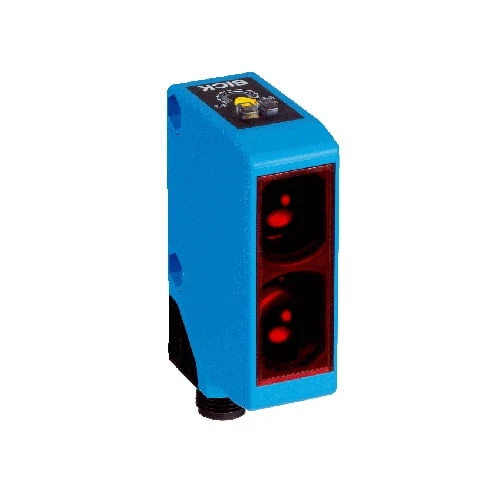
1. Detecting a carton in a conveyor zone
A conveyor can aim the sensor at a carton surface while fixed structure lies farther away. The two-turn potentiometer sets the detection zone within the reference-white 100–300 mm range. External zone logic reads the NPN signal, after commissioning checks actual carton reflectance and separation from the background, including the shorter stated black-target range where relevant.
Problem Solved
An occupied-zone signal helps conveyor logic identify a carton at the monitored point, with range adjustment and background suppression supporting detection from one mounting side.
Carton presence
Conveyor zone
Background suppression
2. Checking an insert at an assembly station
An assembly station can present an expected insert nearer to the sensor than the empty nest surface. Range adjustment establishes the intended target zone, and external inspection logic samples the NPN output when the assembly is stationary. The L/D input selects the switching behavior needed by the control circuit; setup verifies actual insert color, gap and placement tolerance.
Problem Solved
An insert-presence reference helps inspection logic distinguish the expected loaded condition from an empty nest, using a locally adjusted optical zone and selectable output behavior.
Assembly inspection
Insert presence
L/D input
3. Registering separated trays at a transfer station
A transfer station can pass separated trays through the adjusted sensing zone and send the NPN signal to external counting logic. The ≤3 ms response and 160 Hz specification guide selection of tray spacing and speed. The rotatable M12 connector supports cable routing, while commissioning checks actual tray reflectance, interruption duration and controller input timing.
Problem Solved
A tray-passage event helps counting logic register separated loads, with documented response timing and an adjustable connector position supporting the transfer-station installation.
Tray passage
External counting
Connector routing