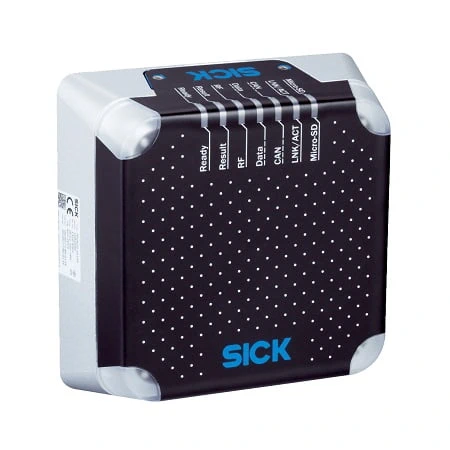
SICK 1068728 RFU620-10105 UHF RFID Read/Write Device

USD 2,362.62

RFU620-10105 is a UHF RFID read/write device with an integrated circular antenna, Ethernet, heating and China/Thailand approval at 920.625–924.375 MHz.

SKU SICK-1068728 Category
SICK RFID

SICK RFU620-10105 UHF RFID Read/Write Device

BrandSICK
Model IdentifierRFU620-10105
Official Part Number1068728

Technical Overview

The SICK RFU620-10105 is a mid-range UHF RFID read/write device with an integrated circularly polarized antenna and China/Thailand radio approval. Its carrier band is 920.625–924.375 MHz, with 0.2 W ERP output and adjustable transmitting power. Reading range is up to 2 m, depending on the transponder and ambient conditions. It supports EPCglobal UHF Class 1 Generation 2, ISO/IEC 18000-6 C and RAIN RFID. Ethernet supports result output and service access, with PROFINET and EtherNet/IP interfaces also documented. Two physical inputs and two physical outputs support process integration. The IP67 aluminum/PPS device uses 10–30 V DC; enabled heating requires 20–30 V DC and raises typical consumption from 8 W to 16 W.

China/Thailand UHF RFID reader/writer with integrated circular antenna, 920.625–924.375 MHz carrier band, Ethernet, two physical inputs/outputs and heating.

Key Features

  • Mid-range UHF RFID read/write device with integrated antenna
  • China/Thailand radio approval; 920.625–924.375 MHz carrier band
  • EPCglobal UHF Class 1 Gen 2 / ISO/IEC 18000-6 C / RAIN RFID
  • Up to 2 m reading range, dependent on transponder and ambient conditions
  • Circular polarization; 100° aperture; adjustable transmitting power; 0.2 W ERP
  • Ethernet TCP/IP; PROFINET single port; EtherNet/IP
  • Two physical digital inputs and two physical digital outputs
  • 10–30 V DC; heating requires 20–30 V DC; typical 8 W / 16 W with heating
  • Aluminum die-cast/PPS housing; IP67; −40 to +50 °C operation
  • SOPAS ET configuration; web server; microSD parameter cloning/data storage

Read or write compatible UHF transponders within a commissioned identification zone and pass results to external control through the documented interfaces.

Technical Specification Matrix

ParameterValue
Product typeMid-range UHF RFID read/write device with integrated antenna
Radio approvalChina (800 900 RFID 设备检验标准); Thailand
Frequency bandUHF, 860–960 MHz technology band
Carrier frequency920.625–924.375 MHz
RF output power0.2 W ERP (23 dBm)
RFID standardsEPCglobal UHF Class 1 Generation 2; ISO/IEC 18000-6 C; RAIN
ModulationPR-ASK
Reading range≤2 m; depends on transponder used and ambient conditions
AntennaIntegrated; circular polarization; adjustable transmitting power
Aperture angle100°
Axial ratioTypically 3 dB
Front-to-back ratio>5 dB
Power supply10–30 V DC; with heating 20–30 V DC
Power consumptionTypically 8 W; with heating typically 16 W
ConnectionOne A-coded M12 17-pin male connector; one D-coded M12 four-pin female Ethernet connector; one USB five-pin micro-B socket
EthernetTCP/IP; OPC UA Companion Spec V1.0 from firmware 2.20; read-result output and service; 10/100 Mbit/s
PROFINETSingle port; dual port optional via external CDF600-2 connection module; read-result output; 10/100 Mbit/s
EtherNet/IPRead-result output; 10/100 Mbit/s
REST APIRead-result output and service from firmware 2.52; 10/100 Mbit/s
Serial interfaceRS-232; RS-422 via four-wire connection only; 0.3–115.2 kBaud; AUX 57.6 kBaud; result output and service
CANSICK CAN Sensor Network; read-result output
CANopenRead-result output
Optional fieldbus integrationPROFIBUS DP via external CDF600-2; EtherCAT via external fieldbus module
USBUSB 2.0 service interface
Digital inputsTwo physical; two additional logical inputs via optional CMC600 in CDB620 / CDM420
Digital outputsTwo physical; two additional logical outputs via optional CMC600 in CDB620 / CDM420
IndicatorsSeven multicolor status LEDs; four RGB process-feedback LEDs
Operator interfaceWeb server
ConfigurationSOPAS ET; alternatively own tools using CoLa command language
Memory cardmicroSD for parameter cloning and data storage
ProgrammingApplication-specific programming with SICK AppStudio; SICK AppSpace functionality requires SDK6U-P00100 SD accessory and firmware ≥2.0.0
Additional functionsDiagnosis; updatable firmware; programmable data output format; Heartbeat; triggering
Housing materialAluminum die-cast and PPS plastic
IP ratingIP67
Protection classIII
MTBF>100 years
Operating temperature−40 to +50 °C
Storage temperature−40 to +70 °C
Relative humidity90%; non-condensing
EMCEN 301489-3
Vibration resistanceEN 60068-2-64:2008-02
Shock resistanceEN 60068-2-27:2009-05
Physical Weight (kg)0.78

Industrial Applications

1. Identifying a tagged carrier at a work station

A work station can position a compatible UHF-tagged carrier within a commissioned reading zone and trigger identification when the carrier arrives. The integrated circular antenna and adjustable transmitting power help establish that zone using actual tags and surrounding materials. External process logic receives the read result through a supported interface and selects the appropriate work sequence.

Problem Solved

A carrier identity reference helps external process logic select the intended work sequence, using a checked UHF reading zone and an explicit read-result interface.

Carrier identification UHF tags Process integration

2. Checking tagged containers at a conveyor handover

A conveyor handover can present compatible tagged containers to the reader and send their identifiers to external routing logic. Commissioning checks transponder choice, container orientation, nearby materials and reading time at the actual conveyor speed. The installation establishes triggering and transmitting-power settings before the host associates each returned identity with the corresponding container movement.

Problem Solved

An electronic container identity helps external routing logic associate a handover event with the intended load, using a commissioned reading zone and controlled trigger timing.

Container handover Routing reference Triggering

3. Writing process data to a reusable tagged fixture

A production station can use the read/write device with a compatible writable UHF transponder on a reusable fixture. External application logic reads the existing identification, writes the intended process data and checks the resulting transaction before the fixture leaves. Setup verifies transponder memory capabilities, the chosen protocol and reliable communication across the actual fixture presentation range.

Problem Solved

A writable fixture record helps external application logic carry process information with the identified fixture, using a verified compatible transponder and checked read/write transactions.

Fixture data RFID writing Process record

Select your currency