Sale!

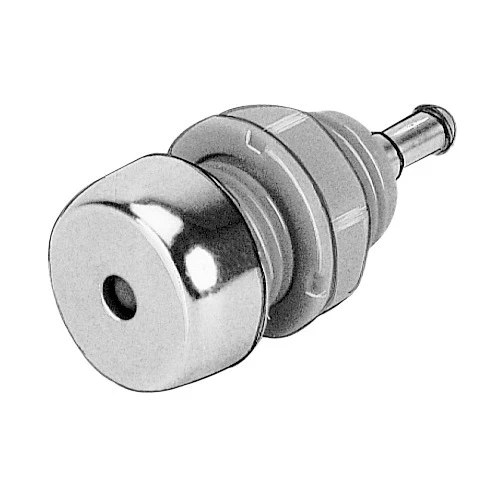
Festo 9791 Pressure Indicator, OH-10, Red, PK-3

Original price was: USD 38.22.Current price is: USD 33.54.

Mechanical pneumatic indicator with spring-loaded visible piston, red display, 10.5 mm panel opening, PK-3 barbed connection and 1.4–8 bar range.

SKU Festo-9791 Category
Festo Pneumatic Displays

Festo OH-10 Pressure Indicator

BrandFesto
Model IdentifierOH-10
Official Part Number9791

Technical Overview

The Festo OH-10 is a mechanical pressure indicator that uses air pressure to move a spring-loaded piston into a clearly visible front position. This exact 9791 version has a red indicator and a PK-3 barbed pneumatic connection, with a specified operating range of 1.4–8 bar. It mounts through a 10.5 mm panel opening and weighs 4 g, providing a compact visual indication point on a pneumatic panel. The documented operating medium is compressed air to ISO 8573-1 [7:-:-], and the ambient range is −10 to 80 °C. Its visual indication represents the pneumatic condition at the connected point rather than a graduated pressure reading.

Red mechanical pressure indicator with spring-loaded piston, PK-3 barbed connection, 10.5 mm panel mounting and 1.4–8 bar range.

Key Features

  • Air-pressure-driven spring-loaded indicator piston
  • Front-visible mechanical indication
  • Red indicator for exact part 9791
  • Panel mounting through a 10.5 mm opening
  • PK-3 barbed pneumatic connection
  • 1.4–8 bar operating-pressure range
  • 4 g product weight
  • −10 to 80 °C ambient range
  • Compressed-air medium to ISO 8573-1 [7:-:-] and VDMA24364-B1/B2-L PWIS conformity

Make the pressure condition visible at a panel through a red spring-loaded indicator with a PK-3 connection and 4 g product weight.

Technical Specification Matrix

ParameterValue
Operating pressure0.14 MPa...0.8 MPa; 1.4 bar...8 bar; 20.3 psi...116 psi
Operating mediumCompressed air to ISO 8573-1:2010 [7:-:-]
Note on operating and pilot mediumLubricated operation possible (in which case lubricated operation will; always be required)
LABS (PWIS) conformityVDMA24364-B1/B2-L
Ambient temperature-10 °C...80 °C
Physical Weight (kg)0.004
Pneumatic connectionBarbed connector PK-3
Note on materialsRoHS compliant
Display mechanismAir pressure moves a spring-loaded piston into a front-visible position
Indicator colourRed
Panel opening diameter10.5 mm

Industrial Applications

1. Local Indication at a Workstation Air Feed

An operator needs to see the pneumatic condition at a workstation feed without reading an electrical controller screen. The indicator connects through its PK-3 barb and uses the air pressure to move a spring-loaded piston into view. Its red display and 10.5 mm panel mounting place the indication at the operator panel within the documented 1.4–8 bar operating range.

Problem Solved

A mechanical piston turns the connected air-pressure condition into a visible panel indication, giving the operator a local observation point without an electrical display interface.

Red mechanical display PK-3 connection 10.5 mm panel opening

2. Observing an Air-Signal Step during Sequence Setup

A technician commissions a pneumatic sequence and needs to observe whether a selected control line becomes pressurized during its step. The compact indicator can be connected to that line through the PK-3 interface, presenting its piston at the front when actuated. The 4 g component and panel mounting support a local indication point while the actual circuit remains responsible for the sequence logic.

Problem Solved

Visual indication at the selected signal line makes a pneumatic sequence step observable, helping the technician relate the commanded operation to the pressure condition at that point.

Pneumatic signal observation Front-visible piston 4 g

3. Comparing Pressure Indications across Machine Branches

A machine panel presents several pneumatic branches so maintenance can compare their local conditions during fault diagnosis. Individual OH-10 indicators provide a red mechanical indication for each connected point using a 10.5 mm panel opening. This arrangement exposes differing branch conditions at the same panel, while the indicators retain their 1.4–8 bar operating range and do not replace graduated gauges for numerical pressure comparison.

Problem Solved

Separate panel indicators make branch conditions visible together, supporting localization of a pneumatic discrepancy without assigning a numeric pressure-measurement function to the mechanical display.

Branch comparison Red indication Panel mounting

Select your currency