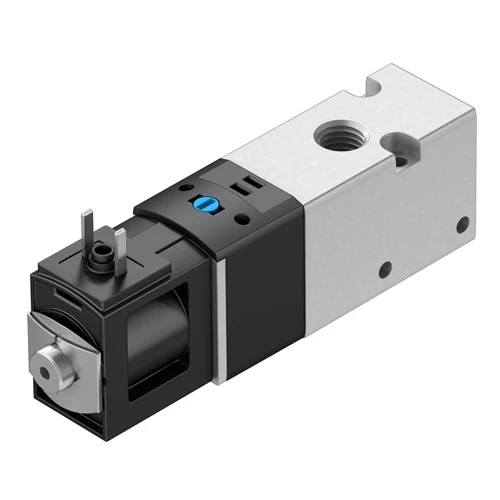
1. Single-Acting Fixture Clamp Control
An assembly fixture uses a single-acting pneumatic clamp that needs pressure during the holding step and exhaust for release. The normally closed 3/2-way valve provides these supply-and-exhaust paths through G1/8 connections. Electrical actuation uses a 24 V DC coil, while internal pilot air and pneumatic spring reset define the valve's actuation and reset arrangement within the 1.5–8 bar operating range.
Problem Solved
Three-port switching supplies the clamp line when commanded and provides its exhaust path in the alternate state, combining the two required pneumatic connections in one solenoid valve.
3/2-way NC
G1/8 ports
24 V DC
2. Timed Air-Blast Command
A packaging station needs an electrical command for a compressed-air blast used to clear a tooling surface or release a part. This normally closed valve switches the air feed through a G1/8 working port. Its 16 ms switch-on and 20 ms switch-off times provide documented valve timing characteristics, while the 550 l/min nominal flow characterises the selected pneumatic size.
Problem Solved
The normally closed solenoid valve converts the machine command into a switched air feed, with published flow and switching-time data supporting the planned blast sequence.
550 l/min nominal
16 ms on
20 ms off
3. Electrical-to-Pneumatic Pilot Signal Conversion
A machine uses a pneumatic command to operate a downstream control element. This 3/2-way valve converts a 24 V DC electrical input into pressure and exhaust states at its working connection. The Type C electrical interface to EN 175301-803 and manifold-rail or through-hole mounting provide defined integration options, while internal pilot air supports actuation within the specified operating-pressure range.
Problem Solved
The valve links an electrical sequence output to a pneumatic command line, providing supply-and-exhaust switching and a documented pneumatic spring reset mechanism in one component.
24 V DC
Type C
Pneumatic spring reset