Skip to content

Contact Us:
sales@inosaki.com

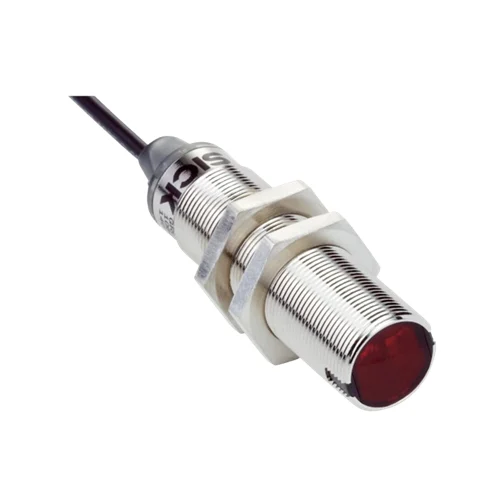
SICK 1091354 GRTE18-N1152 NPN Infrared Diffuse Sensor

SICK 1091354 GRTE18-N1152 NPN Infrared Diffuse Sensor

USD 38.74

M18 metal energetic photoelectric sensor with 10–400 mm reference-white sensing, 850 nm infrared LED, complementary NPN outputs and 2 m PVC cable.

SKU: SICK-1091354 Category:
SICK GR18

SICK GRTE18-N1152 NPN Infrared Diffuse Sensor

BrandSICK
Model IdentifierGRTE18-N1152
Official Part Number1091354

Technical Overview

The SICK GRTE18-N1152 is an energetic photoelectric proximity sensor with axial optics in an M18 × 1 metal housing. It evaluates infrared light reflected from the target, with a 10–400 mm sensing range and 5–550 mm maximum range on 90% remission reference white. An 850 nm LED illuminates the target, and a 270° potentiometer adjusts the sensing condition. Complementary NPN outputs provide light/dark conditions with response below 1,000 µs and a 500 Hz switching rating. A 2 m four-wire PVC cable connects the device. Nickel-plated brass/ABS construction, PMMA optics, IP67 protection, two metal mounting nuts and local power/target indication support installation within the stated supply and load-dependent temperature limits.

M18 metal infrared energetic sensor with 10–400 mm reference-white sensing, complementary NPN outputs, local adjustment and 2 m four-wire PVC cable.

Key Features

  • Energetic reflected-light sensing with axial optics in an M18 × 1 metal housing
  • 10–400 mm sensing; 5–550 mm maximum on 90% remission reference white
  • 850 nm infrared LED; 100,000 h average LED service life at +25 °C
  • 270° sensing-range potentiometer
  • Complementary NPN light/dark outputs
  • Response <1,000 µs with resistive load; 500 Hz at 1:1 light/dark ratio
  • 2 m four-wire PVC cable; two metal mounting nuts, 24 mm across flats
  • 10–30 V DC; output current derates above 24 V or +49 °C
  • Green power LED; yellow target-present indication
  • Nickel-plated brass/ABS housing and PMMA optics; IP67

Set one-sided infrared reflected-light sensing with a local potentiometer and report the target condition through complementary NPN outputs.

Technical Specification Matrix

ParameterValue
Functional principleEnergetic photoelectric proximity sensing
Sensing range10–400 mm on 90% remission reference white, DIN 5033
Maximum sensing range5–550 mm on 90% remission reference white, DIN 5033
Light sourceInfrared LED; wavelength 850 nm
Average LED service life100,000 h at +25 °C
AdjustmentSensing-range potentiometer, 270°
Switching outputComplementary NPN
Switching modeLight/dark switching
Output current≤100 mA; maximum 50 mA when supply >24 V or ambient >+49 °C
Response time<1,000 µs signal transit time with resistive load
Switching frequency500 Hz at 1:1 light/dark ratio
Connection2 m four-wire PVC cable; do not bend below 0 °C
Conductor functionsCD-094: BN=L+; WH=complementary Q; BU=M; BK=Q
Power supply10–30 V DC; short-circuit-protected network, maximum 8 A
Ripple<5 Vpp; remain within supply-voltage tolerances
Current consumption30 mA
Circuit protectionSupply and input/output reverse-polarity protection; output overcurrent and short-circuit protection
Protection classIII
Housing designCylindrical; axial optical axis
Mounting threadM18 × 1
Housing materialNickel-plated brass and ABS
Optics materialPMMA plastic
Items suppliedTwo metal fastening nuts; 24 mm across flats
IP ratingIP67
IndicationGreen on: power on; yellow on: object present; yellow off: object not present
Operating temperature−25 to +55 °C at supply ≤24 V and output current <50 mA
Storage temperature−40 to +70 °C
EMCEN 60947-5-2
UL fileE348498
ECOLAB certificateListed in manufacturer datasheet

Industrial Applications

1. Detecting an opaque article at a loading position

A loading fixture can aim the sensor toward the expected article surface and read a complementary NPN change when the target arrives. Energetic sensing evaluates infrared light reflected from one mounting side, and the potentiometer adapts the sensing condition. Commissioning uses actual surface remission, geometry and distance rather than assuming the reference-white range applies to every article.

Problem Solved

One-sided reflected-light detection provides external sequence logic with an article-presentation reference, helping coordinate a loading step without a receiver or reflector across the working area.

Article presentation Infrared sensing NPN outputs

2. Counting separated packages on a feed conveyor

A conveyor can move separated opaque packages through the sensing field and supply NPN transitions to external counting logic. The 500 Hz rating and response below 1,000 µs provide the timing basis. Setup verifies actual package reflectance, coverage and spacing at the installed distance while respecting the supply, output-load and ambient-temperature conditions.

Problem Solved

Distinct reflected-light transitions give external counting electronics package-passage events, helping track separated loads with a compact cylindrical sensing head positioned on one conveyor side.

Package count 500 Hz External counter

3. Timing a load waiting at a conveyor receiving point

A receiving point can position the sensor so a waiting opaque load reflects infrared light toward the sensing head. External control times the maintained target-present condition and compares it with the normal transfer interval. Complementary NPN states and the yellow object-present LED provide target context while the controller coordinates upstream release and receiving-point clearance.

Problem Solved

Timing a maintained target-present condition gives external transfer logic a basis for recognizing prolonged receiving-point occupancy and coordinating the next incoming load.

Occupancy timing Complementary NPN Local indication

Select your currency