Skip to content

Contact Us:
sales@inosaki.com

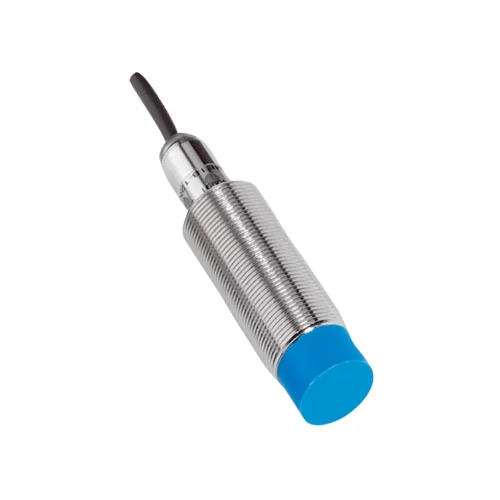
SICK 1040964 IME18-08NNOZW2S NPN NC Inductive Proximity Sensor

SICK 1040964 IME18-08NNOZW2S NPN NC Inductive Proximity Sensor

USD 23.40

IME18-08NNOZW2S offers 8 mm nominal and 6.48 mm assured sensing, non-flush M18 mounting, NPN normally-closed output, 1,000 Hz and a 2 m PVC cable.

SKU: SICK-1040964 Category:
SICK IME

SICK IME18-08NNOZW2S NPN NC Inductive Proximity Sensor

BrandSICK
Model IdentifierIME18-08NNOZW2S
Official Part Number1040964

Technical Overview

The SICK IME18-08NNOZW2S is a standard M18 × 1 inductive proximity sensor for non-flush installation. It provides 8 mm nominal sensing and 6.48 mm assured range, with reference reduction factors for different target metals. Its NPN normally-closed output uses a three-wire DC connection and has a 1,000 Hz switching rating. A 2 m PVC cable with 0.25 mm² conductors connects the 10–30 V DC device to external control. Nickel-plated brass housing and a PA66 sensing face provide IP67 protection, with short-circuit and power-up pulse protection. Two nickel-plated brass mounting nuts are supplied, and operation spans −25 to +75 °C.

Non-flush M18 inductive sensor with 8 mm nominal range, 6.48 mm assured range, NPN normally-closed output, 1,000 Hz switching and 2 m PVC cable.

Key Features

  • Standard M18 × 1 housing; non-flush installation
  • 8 mm nominal sensing range; 6.48 mm assured range
  • NPN normally-closed output; three-wire DC design
  • 1,000 Hz switching frequency
  • 2 m three-wire PVC cable; 0.25 mm² conductors; Ø3.9 mm jacket
  • 10–30 V DC; ≤10 mA without load; continuous output current ≤200 mA
  • Short-circuit and power-up pulse protection; availability delay ≤100 ms
  • Nickel-plated brass housing; PA66 sensing face; IP67
  • 67 mm housing length; 42 mm thread; maximum tightening torque ≤40 Nm
  • Two nickel-plated brass mounting nuts supplied; −25 to +75 °C operation

Provide an NPN normally-closed metal-detection reference from a non-flush M18 sensing face, with assured range and material-dependent setup limits.

Technical Specification Matrix

ParameterValue
Functional principleInductive proximity sensing
Housing designMetric standard design; M18 × 1 thread; Ø18 mm body
InstallationNon-flush
Nominal sensing range Sn8 mm
Assured sensing range Sa6.48 mm
Switching outputNPN normally closed; DC three-wire design
Switching frequency1,000 Hz
Connection2 m three-wire PVC cable; 0.25 mm² conductors; Ø3.9 mm cable
Wire assignmentCD-003: BN=L+; BK=NC output; BU=M
Power supply10–30 V DC
Ripple≤10%
Voltage drop≤2 V at maximum output current
Availability delay≤100 ms
Hysteresis5–15%
Reproducibility≤2% of Sr at constant supply and ambient temperature
Temperature drift±10% of Sr
Continuous output current≤200 mA
No-load current≤10 mA
Circuit protectionShort-circuit protection; power-up pulse protection
Housing materialNickel-plated brass
Sensing face materialPA66 plastic
Housing length67 mm; partial mechanical size
Thread length42 mm
Maximum tightening torque≤40 Nm
Items suppliedTwo nickel-plated brass mounting nuts; 24 mm across flats
IndicationDisplay LED shown
IP ratingIP67; EN 60529
Operating temperature−25 to +75 °C
EMCEN 60947-5-2
Shock resistance30 g, 11 ms
Vibration resistance10–55 Hz, 1 mm
Material reduction factorsReference values, may vary: St37 steel 1; stainless steel V2A/304 approximately 0.8; aluminum approximately 0.45; copper approximately 0.4; brass approximately 0.4
Installation drawing clearancesA=18 mm; B=36 mm; C=18 mm; D=24 mm; E=16 mm; F=64 mm; use manufacturer graphic for geometry
MTTFD1,735 years
DCavg0%
UL fileNRKH.E181493

Industrial Applications

1. Confirming a metal fixture at a seated stop

A fixture can present a metal flag within the commissioned sensing gap when it reaches its seated stop. External sequencing evaluates the normally-closed NPN state, which turns off for the detected target. Setup checks the 8 mm nominal and 6.48 mm assured ranges, target-material reduction factors and non-flush clearances before using the condition in an ordinary machine sequence.

Problem Solved

A seated-metal reference helps external sequencing distinguish the fixture’s arrived position, with the inverse output behavior and actual target gap established during commissioning.

Fixture position NPN NC Non-flush mounting

2. Counting separated metal features on a moving wheel

A wheel can present separated metal features to the sensing face and generate inverse NPN transitions for an external counter. The 1,000 Hz rating provides a switching-frequency reference, while actual feature width, spacing and gap are checked at operating speed. Non-flush installation clearances and target-material reduction factors are considered so surrounding metal does not become the intended target.

Problem Solved

Repeated inverse metal-passage signals give external counting logic a wheel-motion reference, with feature separation and sensing margin verified for the actual speed and material.

Metal feature count 1,000 Hz Inverse switching

3. Checking a metal insert before an assembly step

An assembly station can position the expected insert near the sensing face and sample the normally-closed output after presentation. External inspection logic interprets the detected-target off state and distinguishes it from an empty carrier condition. Commissioning checks carrier metal, insert material and position tolerance against the material reduction factors and non-flush installation geometry over the intended temperature range.

Problem Solved

An insert-presence reference helps external assembly logic identify an omitted metal component before a dependent operation, with inverse switching evaluated against the commissioned carrier arrangement.

Insert presence Assembly inspection Material-dependent range

Select your currency