1. Regulating a pressurized liquid supply
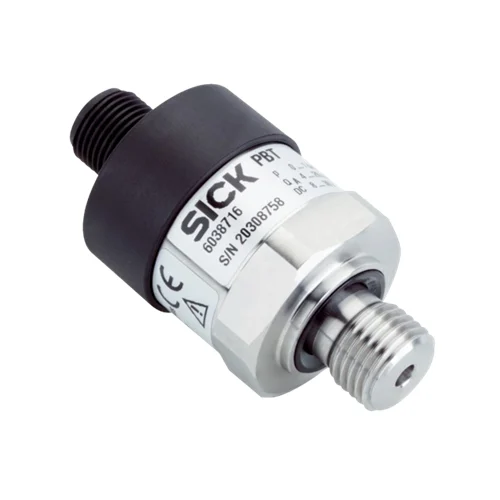
A pump-fed liquid line can connect the transmitter to a compatible G ¼ A port and send its 4–20 mA signal to an external analog controller. The controller compares measured gauge pressure with its configured reference and adjusts a separate pump or valve. Setup keeps normal pressure within 0–40 bar and verifies fluid compatibility, the 0 to +80 °C process range and the supply-dependent loop load.
Problem Solved
A continuous gauge-pressure signal gives external regulation logic a process reference, helping maintain the configured supply condition as demand changes through the liquid distribution line.
Liquid supply
0–40 bar gauge
4–20 mA
2. Measuring pressure decay in an isolated test fixture
An isolated test fixture can measure pressure before and after a controlled hold period using the two-wire analog output. External test software calculates the change and compares it with fixture-specific acceptance limits after stabilization. The response below 4 ms supports acquisition timing, while accuracy, non-repeatability, signal noise and temperature effects define whether the expected decay is distinguishable for the actual test.
Problem Solved
A pressure trace during the isolated hold gives external test logic evidence of pressure loss, supporting a fixture-specific decay assessment with thresholds matched to the documented measurement limits.
Isolated hold test
Analog pressure trace
<4 ms response
3. Recording pressure cycles for machine maintenance
A machine logger can sample the pressure signal during repeated pressurization and release cycles and associate each trace with its operating phase. The 0–40 bar gauge range and continuous current output provide the measurement basis, while the stated minimum 100 million load cycles supports repeated pressure cycling. External analysis compares timing and pressure profiles with a recorded reference while accounting for temperature and long-term stability.
Problem Solved
Recorded pressure-cycle profiles help maintenance personnel identify changes in machine behavior, using measured pressure and timing trends to direct inspection of separate valves, seals or supply equipment.
Cycle logging
Pressure profiles
External maintenance analysis