1. Detecting a load in front of a machine structure
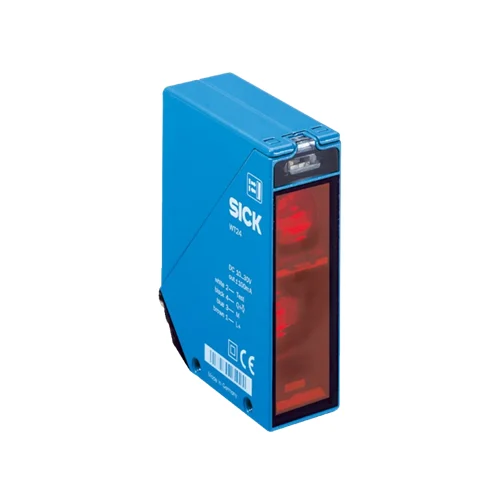
A handling station can position the sensor so a presented opaque load lies in the adjusted sensing zone and a machine structure remains farther behind it. Background suppression separates the intended near surface from the more distant background. The potentiometer sets the working range, while the isolated relay reports the load condition to external sequencing logic within the documented response and contact ratings.
Problem Solved
Distance-based background rejection helps external sequencing logic distinguish the intended load from the structure behind it, supporting a load-present reference from one mounting side.
Background suppression
Adjustable range
Isolated relay
2. Counting separated containers at a slow conveyor
A slow conveyor can present separated opaque containers to the adjusted infrared sensing zone. External counting logic reads the relay transitions as each container passes, with conveyor speed and spacing chosen for the 10 Hz switching limit and response no greater than 10 ms. The light/dark selector establishes the desired contact-state behavior, and actual container remission determines the usable range.
Problem Solved
Relay transitions from separated container passages give external counting logic a throughput reference, supporting production counts when the transport timing and target surfaces match the sensor limits.
Slow conveyor count
10 Hz
Light/dark selector
3. Requesting replenishment at a parts chute
A parts chute can aim the sensor toward the expected material surface at a chosen fill height. When opaque parts no longer occupy the adjusted detection zone, the relay state changes and external control logic can request replenishment. Background suppression limits response to farther chute surfaces, while the range potentiometer and light/dark selector adapt the sensing point and signal behavior to representative parts.
Problem Solved
A discrete material-present reference at the selected chute height supports replenishment requests before the feed path empties, reducing reliance on repeated visual checks of the parts supply.
Chute replenishment
Material presence
One-sided installation