1. Reporting an upper filling level in a process vessel
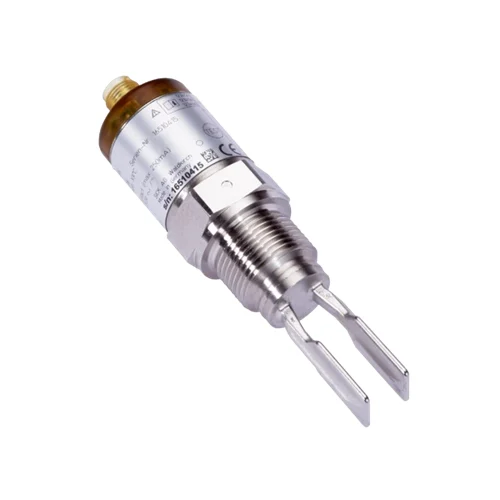
A process vessel can place the tuning fork at its intended upper liquid level through the G ¾ A connection. External filling control interprets the PNP switching condition and commands its own fill valve. Setup checks actual liquid density and viscosity, pressure and process temperature, and allows for the 500 ms response and installed filling rate.
Problem Solved
A defined upper-level condition gives external filling control a reference for ending a fill step, helping limit continued inflow after liquid reaches the installed sensing point.
Upper fill level
PNP condition
Liquid vessel
2. Monitoring the liquid reserve feeding a pump
A supply tank can locate the tuning fork at a selected reserve level above its pump pickup. External pump control reads the level condition and determines whether sufficient reserve remains for the next transfer. The installation accounts for liquid density, viscosity, turbulence and response time so the chosen sensing point corresponds to the required usable reserve.
Problem Solved
A reserve-level condition helps external pump sequencing recognize a depleted supply before starting another ordinary transfer, using the installed sensing height as its process reference.
Supply reserve
Pump sequencing
Point level
3. Detecting liquid accumulation in a collection vessel
A collection vessel can mount the tuning fork at a defined accumulation height and route its PNP condition to external monitoring logic. The controller can record the event or request a controlled emptying step. Commissioning verifies compatible liquid properties, wetted materials and the separate ambient and process temperature limits for the actual location.
Problem Solved
A liquid-accumulation event helps external monitoring distinguish an empty collection vessel from one requiring attention, with the installed point providing a clear process threshold.
Collection vessel
Accumulation event
316L wetted parts