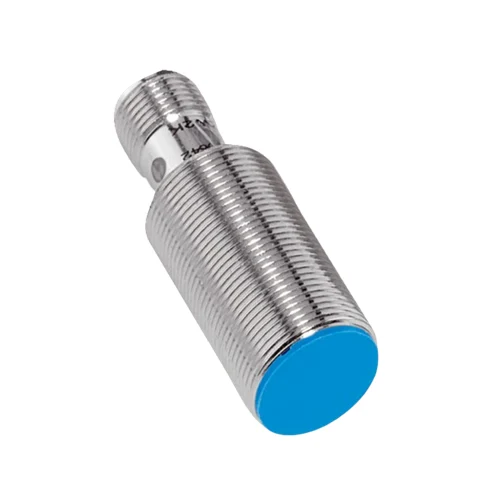
1. Confirming a seated metal fixture target
An assembly fixture can present a metal reference target beside the flush M18 sensing face and read the PNP normally open condition after seating. The 6.48 mm assured range provides the documented distance reference. Setup checks target material, actual gap and installation spacing so the seated and withdrawn positions produce distinct external input states.
Problem Solved
A metal-target condition helps external fixture sequencing distinguish seating from withdrawal, using the documented normally open output and installed target geometry as the position reference.
Fixture position
Flush M18
PNP NO
2. Counting separated metal parts at a feed point
A guided feed can pass separated metal parts through the sensing zone and evaluate transitions with an external counter. The 1,000 Hz rating establishes the sensor timing basis, and external logic interprets the normally open output accordingly. Commissioning checks part size, material reduction, speed and spacing so each part produces one distinguishable passage event.
Problem Solved
Distinct inductive transitions provide external counting logic with metal-part passage events, helping track the feed quantity at a fixed sensing point independently of optical surface contrast.
Metal part count
1,000 Hz
Feed passage
3. Timing the return of a cyclic mechanism
A cyclic mechanism can carry a metal flag past the sensing face at its expected return position. External monitoring compares the PNP normally open transition with the normal sequence interval to identify a late or missing event. Setup fixes the sensing location and checks the installed gap and target material against the verified inductive range.
Problem Solved
A timed metal-reference event helps external monitoring distinguish ordinary mechanism return from a stalled or delayed movement, using the installed sensing location as its process reference.
Return timing
Metal reference
Cyclic movement