1. Confirming a metal slide at its end position
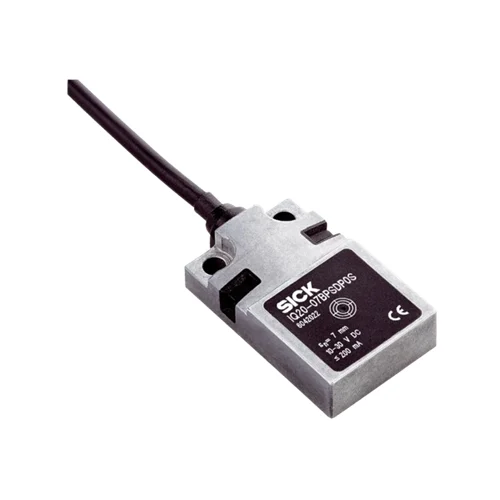
A guided slide can present a metal reference tab beside the flush sensing face at its expected end position. External sequencing reads the PNP normally-open condition before starting the next ordinary process step. Setup establishes a repeatable gap within the 5.67 mm assured range and accounts for target material and the required installation spacing.
Problem Solved
A repeatable metal-target condition helps external sequencing distinguish arrival from withdrawal at a fixed slide position, providing an inductive reference for the next process step.
Slide position
Flush sensing
PNP NO
2. Counting separated metal carriers
A transfer path can move separated metal carriers across the sensor face and send output transitions to an external counter. The 150 Hz switching rating provides the sensor timing basis. Commissioning checks carrier size, material, speed and separation so each passage produces a distinct event within both sensor and receiving-input timing limits.
Problem Solved
Distinct metal-carrier transitions let external counting logic track passages at a fixed point, helping compare transfer quantity with the expected process count.
Carrier counting
150 Hz
Metal passage
3. Monitoring the return interval of a cyclic linkage
A cyclic linkage can carry a metal flag past the flush sensor on each return stroke. External monitoring measures the interval between expected PNP normally-open events and identifies a late or missing return. The installed gap and surrounding metal clearances are fixed during setup, while target-material reduction factors determine the usable sensing margin.
Problem Solved
A recurring metal-reference event gives external timing logic a defined return point, helping distinguish an ordinary cycle from a delayed or interrupted linkage movement.
Return interval
Cyclic linkage
Inductive reference