1. Confirming two positions of a short-stroke clamp
A compatible cylinder clamp can teach one switching point for the open condition and another for the seated condition when both lie within the 0–50 mm detection zone. External sequencing reads the two PNP normally-open outputs as separate position references. Setup verifies cylinder geometry, target positions and reproducibility against the required process decision margin.
Problem Solved
Two taught position conditions help external sequencing distinguish open and seated clamp states, providing separate references for ordinary loading and processing steps.
Clamp positions
Two PNP outputs
Taught points
2. Measuring an actuator transition interval externally
An actuator can move between two taught points in the sensor detection zone while external control timestamps the corresponding PNP transitions. The resulting interval provides a reference for comparing ordinary machine cycles. Commissioning establishes the two positions and validates the actual sensor response and controller input timing against representative actuator movement.
Problem Solved
Separate position events let external monitoring compare actuator transition intervals over repeated cycles, helping identify a change from the established process timing.
Transition interval
External timestamps
Two positions
3. Teaching new position conditions after a format change
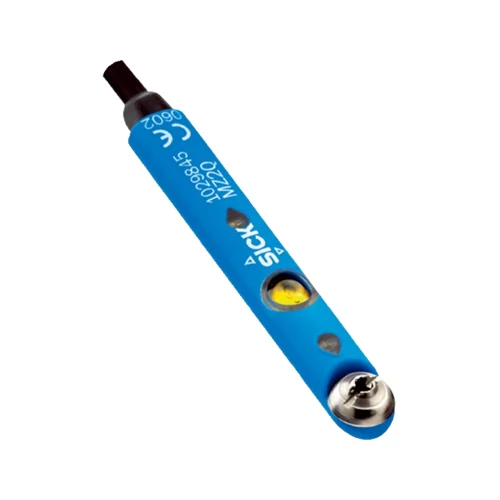
A format-adjustable fixture can present two new cylinder positions within the same 0–50 mm detection zone and use the local teach-in panel to store the required switching points. External setup logic then verifies each output in the intended mechanical state. The enclosed teach-in tool and LED indication support the local setup procedure before ordinary cycling resumes.
Problem Solved
Local teaching lets setup staff establish two position references for a changed fixture format, helping external sequencing use conditions that match the revised mechanical arrangement.
Format setup
Local teach-in
LED indication