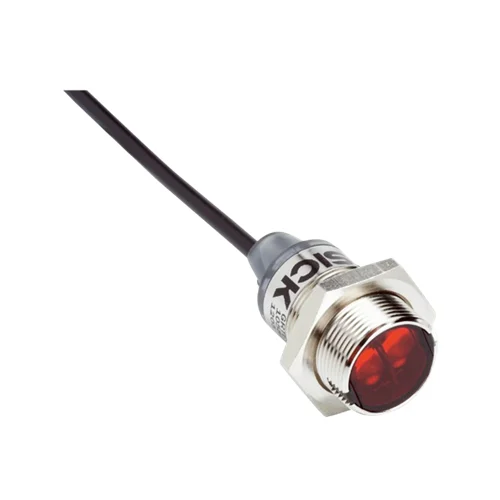
SICK 1076099 GRTB18S-P1112 M18 PNP Background Suppression Sensor

USD 76.70

Axial M18 photoelectric sensor with background suppression, 20–150 mm reference-white range, complementary PNP outputs, 270° potentiometer and 2 m cable.

SKU SICK-1076099 Category
SICK GR18S

SICK GRTB18S-P1112 M18 PNP Background Suppression Sensor

BrandSICK
Model IdentifierGRTB18S-P1112
Official Part Number1076099

Technical Overview

The SICK GRTB18S-P1112 is an axial M18 ×1 photoelectric proximity sensor with background suppression and a 650 nm red PinPoint LED. The reference-white sensing band is 20–150 mm, with a 3–300 mm maximum range and a 7 mm spot at 100 mm. A 270° potentiometer sets sensing range, while complementary PNP outputs provide light- and dark-switching conditions through a 2 m four-wire PVC cable. Response is below 500 µs with resistive load, with 1,000 Hz switching at a 1:1 light/dark ratio. Nickel-plated brass and ABS housing, PMMA optics and IP67 protection support installation using the two supplied metal nuts. Output-current and operating-temperature limits include supply- and ambient-dependent conditions.

Axial M18 background-suppression sensor with 650 nm PinPoint LED, complementary PNP outputs, 270° range potentiometer and 2 m PVC cable.

Key Features

  • Axial M18 ×1 photoelectric proximity sensor with background suppression
  • 20–150 mm reference-white sensing band; 3–300 mm maximum range
  • 650 nm red PinPoint LED; Ø7 mm spot at 100 mm
  • 270° sensing-range potentiometer
  • Complementary PNP outputs for light/dark switching
  • Response <500 µs with resistive load; 1,000 Hz at 1:1 light/dark ratio
  • ≤100 mA output, reduced to 50 mA above 24 V supply or 49 °C ambient
  • 10–30 V DC; 30 mA current consumption; 2 m four-wire PVC cable
  • Nickel-plated brass and ABS housing; PMMA optics; IP67
  • Two 24 mm-across-flats metal fastening nuts; green power and yellow received-light indicators

Adjust a background-suppressed target zone from one mounting side and provide complementary PNP conditions to machine inputs.

Technical Specification Matrix

ParameterValue
Functional principlePhotoelectric proximity sensing with background suppression
Housing designCylindrical, axial optical axis
Mounting threadM18 ×1
Sensing range20–150 mm on 90% remission reference white, DIN 5033
Maximum sensing range3–300 mm on 90% remission reference white
Target-dependent range diagramSensing band 20–150 mm for black 6%, gray 18% and white 90%; maximum ranges 3–150 mm black, 3–200 mm gray and 3–300 mm white
Light sourceVisible red PinPoint LED, 650 nm
Light spot sizeØ7 mm at 100 mm; manufacturer spot diagram also gives Ø6 mm at 150 mm and Ø7 mm at 300 mm
Average LED service life100,000 h at ambient +25 °C
Adjustment270° sensing-range potentiometer
IndicatorsGreen steady: power on; yellow on: object present, off: object absent
Switching outputComplementary PNP outputs, light/dark switching
Conductor functionsCD-094: BN=L+; BU=M; BK=Q; WH=Q inverted
PNP HIGH/LOW voltageSupply voltage minus ≤3 V / approximately 0 V
Output current≤100 mA; at supply >24 V or ambient >49 °C, maximum 50 mA
Response time<500 µs signal transit time with resistive load
Switching frequency1,000 Hz at 1:1 light/dark ratio
Power supply10–30 V DC, limit values; short-circuit-protected network maximum 8 A
Ripple<5 Vpp; remain within supply-voltage tolerances
Current consumption30 mA
Circuit protectionSupply and inputs/output reverse-polarity protection; output overcurrent and short-circuit protection
Protection classIII
Connection2 m four-wire PVC cable
Cable handlingDo not bend below 0 °C
Housing materialNickel-plated brass and ABS
Optics materialPMMA plastic
IP ratingIP67
Items suppliedTwo metal fastening nuts; 24 mm across flats
Operating temperature−25 to +55 °C at supply ≤24 V and output current <50 mA
Storage temperature−40 to +70 °C
EMCEN 60947-5-2
UL filesNRKH.E348498 and NRKH7.E348498
MTTFD985 years
DCavg0%
Certificates listedEU, UK, ACMA and Moroccan declarations; CCC exempt; ECOLAB; cULus; photobiological safety to DIN EN 62471

Industrial Applications

1. Checking whether a component occupies an assembly fixture

An assembly fixture can present an opaque component ahead of a farther backing surface and set the sensor’s range to the intended inspection position. The background-suppressed optical condition provides a presence input to external assembly logic. Setup uses representative component remission and the documented target-dependent ranges, while the two M18 nuts secure the selected sensing position.

Problem Solved

A background-suppressed component condition helps external inspection logic distinguish a loaded fixture from its farther backing surface before the next assembly step proceeds.

Fixture inspection Background suppression PNP outputs

2. Counting separated components on a feed track

A feed track can move separated opaque components through the red sensing spot and deliver the selected PNP transitions to an external counter. The visible spot and range potentiometer assist alignment to the intended passage point. Timing assessment includes the <500 µs response, 1,000 Hz rating, actual target spacing and the supply- and ambient-dependent output-current limit.

Problem Solved

Repeated target transitions supply external counting logic with component-passage events, helping track separated parts from one side of the track without an opposed receiver.

Component counting 1,000 Hz Visible red spot

3. Monitoring material accumulation at a small transfer chute

A transfer chute can aim the sensor at a material-height threshold with the empty chute wall farther behind the adjusted zone. The selected complementary PNP condition reports accumulated opaque material to external feed-control logic. The controller evaluates persistence before holding upstream release, with representative material used to establish the working range and optical alignment during setup.

Problem Solved

A material-present condition at the selected chute threshold gives external feed control an accumulation reference, helping distinguish a normal passing item from sustained obstruction.

Chute accumulation External feed hold Complementary PNP

Select your currency