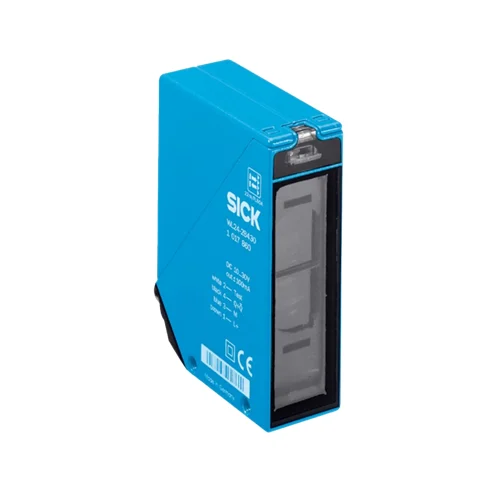
SICK 1017859 WL24-2B240 Heated Retro-Reflective Timer Sensor

USD 208.00

Polarized retro-reflective sensor with 15 m PL80A sensing range, selectable NPN/PNP and light/dark outputs, 0.5–10 s delays and heated plastic screen.

SKU SICK-1017859 Category
SICK W24-2

SICK WL24-2B240 Heated Retro-Reflective Timer Sensor

BrandSICK
Model IdentifierWL24-2B240
Official Part Number1017859

Technical Overview

The SICK WL24-2B240 is a polarized retro-reflective photoelectric sensor with a dual-lens optical system and a visible red LED. The detailed PL80A range diagram specifies 0.03–15 m sensing and 0.03–22 m maximum range. Sensitivity, NPN/PNP output type and light/dark switching are locally selectable. Separate switch-on and off-delay controls provide adjustable 0.5–10 s timing for external process inputs. Permanent low-output front-screen heating is specified for use at +5 to +15 °C with the plastic screen. A zinc die-cast housing, PMMA optics and IP67 protection support machine installation. The 10–30 V DC sensor uses terminal wiring through an M16 gland and includes a sender-off test input.

Polarized retro-reflective sensor with selectable NPN/PNP and light/dark switching, 0.5–10 s delays, terminal wiring and permanent low-output screen heating.

Key Features

  • Polarized dual-lens retro-reflective sensing with visible red LED
  • PL80A diagram: 0.03–15 m sensing and 0.03–22 m maximum range
  • Sensitivity potentiometer, NPN/PNP changeover and light/dark selector
  • Switch-on and off delays adjustable over 0.5–10 s
  • Permanent low-output plastic-front-screen heating, specified for +5 to +15 °C use
  • ≤500 µs optical response with resistive load; 1,000 Hz at 1:1 light/dark ratio
  • 10–30 V DC; 50 mA consumption without load; output ≤100 mA
  • Terminal connection through M16 gland; TE-to-0 V sender-off test input
  • LED signal-strength indication, alignment sight and M5 mounting holes
  • Zinc die-cast housing, PMMA optics, IP67; −40 to +60 °C operation

Configure local output polarity and ON/OFF delays for a retro-reflective process beam, with signal-strength indication for alignment.

Technical Specification Matrix

ParameterValue
Functional principlePolarized photoelectric retro-reflective sensing; dual-lens system with reflector minimum distance
PL80A sensing range0.03–15 m using the detailed manufacturer range diagram
PL80A maximum range0.03–22 m using the detailed range diagram
Other reflector rangesPL50A and PL40A: 0.03–11 m sensing, 0.03–16 m maximum; PL30A, PL20A and Diamond Grade tape: 0.03–7 m sensing, 0.03–10 m maximum; C110A: 0.15–10 m sensing, 0.15–13 m maximum
Light sourceVisible red LED
Average LED life100,000 h at +25 °C
Light spot sizeØ250 mm at 15 m
AdjustmentSensitivity potentiometer; separate light/dark and NPN/PNP selector switches
Digital outputSelectable NPN or PNP; selectable light/dark switching
Output current≤100 mA
Response time≤500 µs with resistive load
Switching frequency1,000 Hz at 1:1 light/dark ratio
Time functionsSwitch-on delay and off delay; individual t1/t2 controls and time-function selector
Delay range0.5–10 s, adjustable
ConnectionTerminal connection with M16 cable gland; connection assembly rotatable by 90°
Terminal assignmentCD-120: 1=L+; 2=M; 4=Q / inverted Q; 5=Test
Sender test inputTE to 0 V switches sender off
Power supply10–30 V DC; short-circuit-protected network maximum 8 A
Ripple<5 Vpp; remain within supply-voltage tolerances
Current consumption50 mA without load
Circuit protectionSupply reverse-polarity protection; interference suppression; output overcurrent and short-circuit protection
Protection classII; reference voltage 50 V DC
Polarization filterProvided
Front-screen heatingPermanent static low heat output with plastic front screen; specified application +5 to +15 °C
Housing materialZinc die-cast metal
Optics materialPMMA plastic
IP ratingIP67
Indicators and alignmentLED signal-strength indicator and alignment sight
MountingM5 threaded mounting hole, 6 mm deep; M5 through-hole
Operating temperature−40 to +60 °C
Storage temperature−40 to +75 °C
MTTFD588 years
DCavg0%
Mission time20 years
UL fileNRKH.E181493 and NRKH7.E181493
Physical Weight (kg)0.33

Industrial Applications

1. Counting separated loads across a conveyor

A conveyor can place a PL80A reflector opposite the sensor so that separated opaque loads interrupt the returned optical path. With time functions deactivated, the selected NPN or PNP output feeds an external counter using the chosen light/dark behavior. Commissioning checks alignment, installed reflector separation and load spacing against the detailed range diagram, optical response and switching-frequency specification.

Problem Solved

Beam interruptions provide external counting logic with load-passage events across the installed reflector path, using locally selectable output behavior to match the receiving control input.

Load counting Retro-reflective beam Selectable output

2. Reporting sustained accumulation at a transfer point

At a conveyor transfer, material that remains across the optical path can indicate sustained occupancy rather than an ordinary passing load. A configured switch-on delay requires the selected switching condition to persist before the output changes. External transfer logic uses that delayed condition to coordinate upstream release, with commissioning relating the 0.5–10 s setting to actual load lengths and transport timing.

Problem Solved

A persistence-based output condition helps external transfer logic distinguish sustained occupancy from brief passages, supporting material-release decisions at the accumulation point.

Accumulation Switch-on delay Transfer occupancy

3. Holding a material-presence condition across short gaps

A feed process carrying separated sections can select an off delay so that the output condition persists briefly after the optical event ends. External process logic receives the held signal while setup defines which physical gaps should be bridged and which should end the process condition. Commissioning chooses light/dark behavior and the delay setting using representative material and motion timing.

Problem Solved

An adjustable held output helps external feed logic maintain its selected process condition across intended short gaps, reducing unnecessary state changes between closely spaced material sections.

Gap bridging Off delay Held process signal

Select your currency