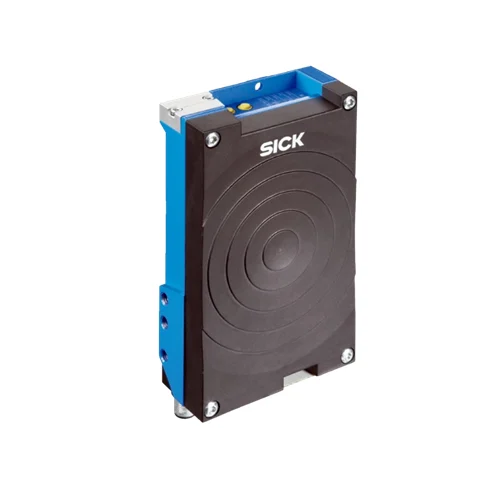
SICK 1044839 Ethernet HF RFID Read/Write Device

USD 1,927.12

13.56 MHz HF reader with integrated antenna, ISO/IEC 15693 support, Ethernet TCP/IP, PROFINET Single Port, EtherNet/IP and M12 connectors.

SKU SICK-1044839 Category
SICK RFID

SICK RFH620-1001201 Ethernet HF RFID Read/Write Device

BrandSICK
Model IdentifierRFH620-1001201
Official Part Number1044839

Technical Overview

The SICK RFH620-1001201 is a 13.56 MHz HF RFID read/write device with an integrated antenna for ISO/IEC 15693 and ISO/IEC 18000-3 Mode 1 transponders. Reading range is up to 150 mm with a plane-parallel RFID ISO card, depending on tag dimensions and quality. This version provides Ethernet TCP/IP, PROFINET Single Port and EtherNet/IP at 10/100 Mbit/s. Its swivel connection unit has separate M12 Ethernet and power/serial/CAN/I/O connectors and one physical digital input. Typical access times distinguish UID, single-block and multi-block operations. SOPAS ET configuration and microSD parameter cloning support setup, while the IP67 aluminum/PPS housing operates on 10–30 V DC.

Integrated-antenna 13.56 MHz HF RFID reader/writer with ISO/IEC 15693 support and M12 Ethernet connections.

Key Features

  • 13.56 MHz HF RFID read/write operation with integrated antenna
  • ISO/IEC 15693 and ISO/IEC 18000-3 Mode 1 transponders
  • ≤150 mm reading with plane-parallel ISO card; dependent on transponder dimensions and quality
  • Ethernet TCP/IP, PROFINET Single Port and EtherNet/IP at 10/100 Mbit/s
  • Separate twelve-pin A-coded and four-pin D-coded M12 connectors
  • One physical digital input; optional CMC600 logical I/O expansion
  • Typical access: UID 18 ms; four-byte block read 13 ms / write 16 ms
  • CAN CSN and CANopen; optional external EtherCAT/PROFIBUS modules
  • SOPAS ET configuration; microSD parameter cloning; six multicolor LEDs and beeper
  • 10–30 V DC; typical 5 W; IP67 aluminum die-cast/PPS housing

Read a compatible tag’s identifier and memory or write process records through an integrated HF antenna for external production and routing software.

Technical Specification Matrix

ParameterValue
Functional principleHF RFID read/write device; Short Range version
AntennaIntegrated
Frequency13.56 MHz
RFID standardsISO/IEC 15693; ISO/IEC 18000-3 Mode 1
Radio approval scope listedGlobal
Reading range≤150 mm with RFID ISO card transponder plane parallel to antenna; depends on transponder dimensions and quality
Typical UID access time18 ms to read 64-bit / 8-byte UID
Typical single-block access timesRead 32-bit / 4-byte block: 13 ms; write: 16 ms
Typical 28-block access timesRead 896 bits / 112 bytes: 64 ms; write: 442 ms
Air-interface rate26 kbit/s default
ConnectionM12 twelve-pin A-coded male for power/serial/CAN/I/O; M12 four-pin D-coded female for Ethernet
Power supply10–30 V DC
Power consumptionTypical 5 W
Housing materialsAluminum die-cast; PPS plastic
Housing colorsBlue; black
IP ratingIP67
Protection classIII
MTBF>100 years
Serial interfacesRS-232, RS-422, RS-485; RS-422/RS-485 only via four-wire connection; data and service
Serial rates0.3–115.2 kBaud; AUX 57.6 kBaud
CANCSN (SICK CAN Sensor Network); read-result data; 20–1,000 kbit/s
CANopenRead-result data; 20–1,000 kbit/s
PROFINETSingle Port; Dual Port optional via external CDF600-2; read-result data; 10/100 Mbit/s
EtherCATOptional via external CDF600 fieldbus module; read-result data
PROFIBUS DPOptional via external CDF600-2 fieldbus module; read-result data
Digital inputsOne physical input; two additional logical inputs through optional CMC600 in CDB620/CDM420
Digital outputsTwo additional logical outputs through optional CMC600 in CDB620/CDM420
Optical indicatorsSix multicolor LEDs
Acoustic indicatorOne feedback beeper
Local controlsTwo function buttons
ConfigurationSOPAS ET; alternatively own configuration tools based on SICK CoLa command language
Memory cardmicroSD for parameter cloning
MountingFour M6 blind tapped holes, 6.5 mm deep; two Ø4.5 mm holes for alternative mounting
Two-reader spacingRFH620: 340 mm / 140 mm / 150 mm for orientations 1 / 2 / 3 respectively in manufacturer assembly figure
EMCEN 301489-3
Vibration resistanceEN 60068-2-64:2008-02
Shock resistanceEN 60068-2-27:2009-05
Operating temperature−20 to +60 °C
Storage temperature−25 to +70 °C
Relative humidity95%, non-condensing
EthernetTCP/IP; read-result data and service; 10/100 Mbit/s
EtherNet/IPRead-result data; 10/100 Mbit/s
Physical Weight (kg)0.45

Industrial Applications

1. Identifying a carrier before a routing decision

A transfer station can present one compatible HF transponder on a stopped carrier to the integrated antenna and read its UID. External routing software associates that identifier with the required destination and issues the transport decision. The 18 ms UID access value is typical; commissioning establishes actual tag orientation, useful reading distance and station dwell rather than treating that value as a complete routing-cycle guarantee.

Problem Solved

A carrier identifier gives external routing software a reference for selecting the next destination, helping associate the physical carrier with its stored production order.

UID identification Carrier routing 13.56 MHz

2. Recording a completed operation in writable tag memory

An assembly station can write an operation code into a writable block on the carrier’s compatible transponder after external process logic confirms completion. The reader supports read/write access, with a typical 16 ms single-block write time for four bytes. External software defines the memory layout and reads back the record; actual tag permissions, station dwell and communication timing determine the implemented transaction.

Problem Solved

Writing and checking an operation record on the carrier tag lets downstream software recover a local progress reference as the carrier moves between assembly stations.

Writable tag record Assembly progress Four-byte block

3. Loading a fixture recipe reference at changeover

A changeover station can read a recipe reference from compatible tag memory on a presented fixture and pass it to external setup software. Reading multiple blocks supports a structured record, with 112 bytes read in a typical 64 ms for the specified 28-block access. External software validates the record and selects its approved machine parameters while commissioning accounts for tag placement and actual transaction duration.

Problem Solved

A structured fixture record supplies external setup software with a recipe reference, helping associate the presented tooling with the approved parameters for the next production run.

Fixture recipe 28-block read External setup

Select your currency