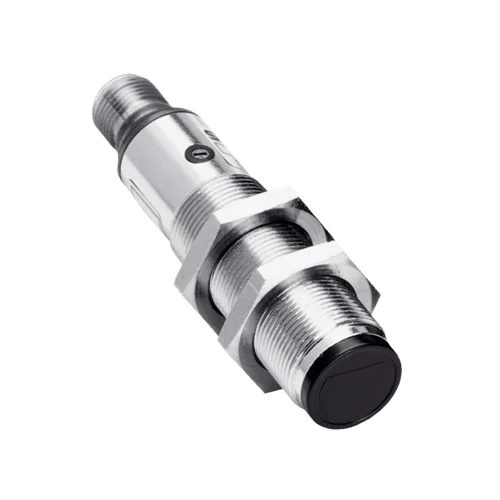
SICK 6013404 VTE18-3F2240 PNP Infrared Diffuse Sensor

USD 99.06

VTE18-3F2240 offers 3–170 mm reference-white sensing, infrared LED light, PNP light switching, 270° range adjustment and M12 connection in an IP67 body.

SKU SICK-6013404 Category
SICK V18

SICK VTE18-3F2240 PNP Infrared Diffuse Sensor

BrandSICK
Model IdentifierVTE18-3F2240
Official Part Number6013404

Technical Overview

The SICK VTE18-3F2240 is an energetic photoelectric proximity sensor with axial optics in an M18 × 1 threaded cylindrical housing. Its infrared LED evaluates light reflected by the target, with 3–170 mm sensing range and 3–200 mm maximum range on 90% remission reference white. A 270° potentiometer adjusts sensing range, and the single PNP output uses light switching. Response is no more than 2 ms with a resistive load, with 250 Hz switching at a 1:1 light/dark ratio. The 10–30 V DC device uses a four-pin M12 connector, nickel-plated brass housing and PMMA optics. IP67 protection and operation from −25 to +70 °C support integration at the installed sensing position.

Infrared energetic diffuse sensor with 3–170 mm reference-white sensing, PNP light switching, 270° adjustment and M12 four-pin connection.

Key Features

  • Energetic photoelectric proximity sensing; axial optical axis
  • 3–170 mm sensing; 3–200 mm maximum range on 90% remission white
  • Infrared LED; Ø10 mm at 200 mm; approximate dispersion angle 2.8°
  • 270° potentiometer for sensing-range adjustment
  • Single PNP output with light switching; output current ≤100 mA
  • ≤2 ms response with resistive load; 250 Hz at 1:1 light/dark ratio
  • M18 × 1 cylindrical housing; M12 four-pin male connector
  • 10–30 V DC; 30 mA consumption without load
  • Nickel-plated brass housing; PMMA optics; yellow signal-strength LED
  • IP67; −25 to +70 °C operation

Adjust reflected-light sensing in an M18 threaded installation and send the PNP light-switching state to external inspection, counting or material-flow logic.

Technical Specification Matrix

ParameterValue
Functional principleEnergetic photoelectric proximity sensor
Optical axisAxial
Sensing range3–170 mm on 90% remission reference white
Maximum sensing range3–200 mm on 90% remission reference white, DIN 5033
Black reference-target ranges3–80 mm sensing; 3–100 mm typical maximum on 6% remission black
Light sourceInfrared LED
Light spot sizeØ10 mm at 200 mm
Average LED service life100,000 h at +25 °C
Angle of dispersionApprox. 2.8°
AdjustmentSensing-range potentiometer, 270°
Switching outputSingle PNP output
Switching modeLight switching
Output current≤100 mA
Response time≤2 ms signal transit time with resistive load
Switching frequency250 Hz at 1:1 light/dark ratio
Power supply10–30 V DC, limit values
Ripple±10%; remain within supply-voltage tolerances
Current consumption30 mA without load
ConnectionM12 four-pin male connector
Pin assignmentCD-066: 1 BN=L+; 2 WH=not connected; 3 BU=M; 4 BK=Q
Circuit protectionSupply and input/output reverse-polarity protection; interference suppression; output overcurrent and short-circuit protection
Protection classIII
Mounting threadM18 × 1
Housing length78 mm
Housing materialNickel-plated brass
Optics materialPMMA plastic
Mounting-nut detail24 mm-across-flats metal
IndicationYellow LED, signal strength
IP ratingIP67
Operating temperature−25 to +70 °C
UL fileNMFT2.E175606
Physical Weight (kg)0.12

Industrial Applications

1. Checking a component at an assembly position

An assembly fixture can present an opaque component at the installed sensing position and send its PNP signal to external sequencing logic. The optical sensing function reports the presented target, while commissioning checks actual surface remission, working distance and placement tolerance against the documented sensing range. The controller samples the resulting state after the fixture settles before requesting the next machine operation.

Problem Solved

A target-present signal gives external sequencing logic a component-position condition, helping coordinate the following assembly operation after the expected part reaches the monitored fixture location.

Fixture position Reflected-light signal PNP

2. Counting separated components passing a fixed point

A feed track can move separated opaque components through the optical sensing zone and supply PNP transitions to an external counter. Setup checks actual target remission, distance, spacing and transit speed against the documented sensing range, response time and switching frequency. The installed geometry gives each component a distinct optical presentation so that counting logic can recognize successive passages.

Problem Solved

Distinct target passages provide external counting logic with component events, helping track separated parts moving through one fixed sensing point without mechanical contact.

Part counting Response timing PNP

3. Timing material occupancy at a feed chute

A feed chute can present its expected opaque material surface within the sensing range and send the PNP state to external timing logic. The controller measures how long material remains at the monitored point and compares that duration with the feed sequence. Commissioning checks representative material surfaces, installed distance and the unloaded chute condition to establish a distinct material-present signal.

Problem Solved

A sustained material signal gives external timing logic an occupancy reference, helping distinguish brief passages from material that remains at the monitored feed-chute position.

Chute occupancy External dwell timer PNP

Select your currency