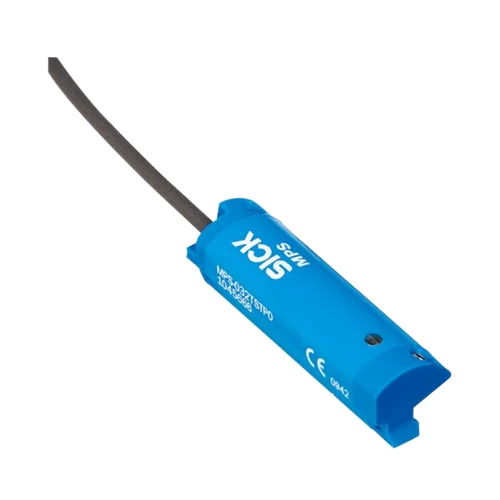
1. Evaluating a cylinder stop position against a process window
A cylinder-driven positioning fixture can feed the sensor voltage or current signal into a matching external analog input. The controller compares the settled position with a commissioned process window within the 32 mm measuring range. Setup accounts for the actual cylinder magnet and the typical 0.3 mm linearity error, rather than treating the range tolerance as measurement accuracy.
Problem Solved
A measured position value lets external fixture logic evaluate a process window around the intended stop, helping distinguish acceptable travel from a displaced settled position.
Position window
Analog input
32 mm range
2. Classifying gripped components from actuator position
A cylinder-operated gripper can use its measured actuator position as an indirect indication of the opening established around a component. External logic compares the settled analog value with commissioned part classes. The application establishes the relationship between actuator movement and jaw geometry, and uses class separations that accommodate actual mechanics, magnet behavior and the stated linearity performance.
Problem Solved
A continuous actuator-position signal gives external gripper logic a basis for distinguishing sufficiently separated opening classes, helping identify a differently sized or missing component after gripping.
Grip opening classes
Settled position
External comparison
3. Reviewing cylinder travel over time for a stalled move
A machine controller can record the selected analog output during a commanded cylinder movement and compare position progression with elapsed time. A sustained plateau before the expected travel endpoint becomes a process-monitoring condition in external logic. The typical 1 ms standard-mode sampling interval provides the sensor-side timing reference, while the analog input scan and transient behavior are included in the recording design.
Problem Solved
A position-versus-time record lets external process logic identify a sustained lack of expected movement, helping distinguish a stalled travel event from normal completion at the intended endpoint.
Travel monitoring
Analog recording
Stall condition