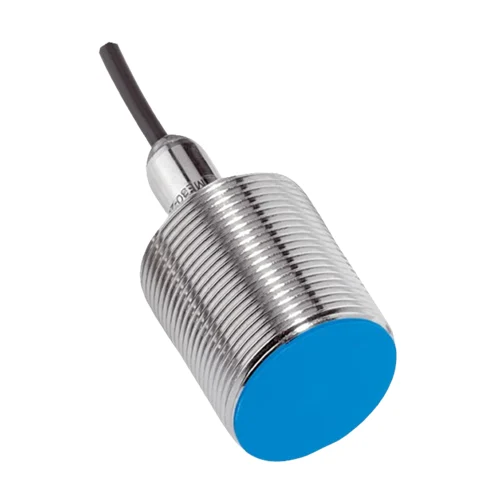
SICK 1041031 IME30-15BPSZW2K 15 mm PNP Inductive Sensor

USD 43.94

IME30-15BPSZW2K offers 15 mm nominal and 12.15 mm assured inductive sensing, flush M30 mounting, PNP normally-open output, 500 Hz switching and a 2 m cable.

SKU SICK-1041031 Category
SICK IME

SICK IME30-15BPSZW2K 5 mm PNP Inductive Sensor

BrandSICK
Model IdentifierIME30-15BPSZW2K
Official Part Number1041031

Technical Overview

The SICK IME30-15BPSZW2K is a short-body M30 × 1.5 inductive proximity sensor for flush installation in metal. Its nominal sensing range is 15 mm and assured range is 12.15 mm, with material-dependent reduction factors for non-reference targets. The PNP normally-open output uses DC three-wire wiring and switches at 500 Hz. A nickel-plated brass housing and PA 66 plastic sensing face provide IP67 protection, and two nickel-plated brass mounting nuts are supplied. The 51 mm housing has 35 mm of mounting thread and connects through a 2 m three-wire PVC cable. Supply spans 10–30 V DC, with continuous output current up to 200 mA, short-circuit and power-up pulse protection, and operation from −25 to +75 °C.

Flush M30 short-body inductive sensor with 15 mm nominal range, 12.15 mm assured range, PNP normally-open output and 2 m three-wire PVC cable.

Key Features

  • M30 × 1.5 short-body inductive sensor for flush metal installation
  • 15 mm nominal sensing range Sn; 12.15 mm assured range Sa
  • Single PNP normally-open output with DC three-wire wiring
  • 500 Hz switching frequency; ≤125 ms delay before availability
  • 10–30 V DC; ≤200 mA continuous output current; ≤10 mA no-load current
  • ≤2 V voltage drop at maximum output current; 3–15% hysteresis
  • Short-circuit protection and power-up pulse protection
  • 2 m three-wire PVC cable; 51 mm housing extent and 35 mm thread
  • Nickel-plated brass housing, PA 66 face and two nickel-plated brass nuts
  • IP67 to EN 60529; −25 to +75 °C operating temperature

Detect nearby metal from a flush M30 mounting position and deliver a PNP normally-open signal to external sequencing or counting logic.

Technical Specification Matrix

ParameterValue
Functional principleInductive proximity sensing
Housing designShort-body
Mounting threadM30 × 1.5; nominal housing diameter 30 mm
InstallationFlush in metal
Nominal sensing range Sn15 mm
Assured sensing range Sa12.15 mm
Material reduction factorsReference values, may vary: St37 steel 1; V2A/304 stainless steel approximately 0.8; aluminum approximately 0.45; copper approximately 0.4; brass approximately 0.4
Switching outputSingle PNP, normally open
Electrical wiringDC three-wire
Switching frequency500 Hz
Power supply10–30 V DC
Ripple≤10%
Voltage drop≤2 V at maximum output current
Delay before availability≤125 ms
Hysteresis3–15%
Reproducibility≤2% of Sr at constant supply voltage and ambient temperature
Temperature drift±10% of Sr
Continuous output current≤200 mA
No-load current≤10 mA
Short-circuit protectionProvided
Power-up pulse protectionProvided
Connection2 m three-wire PVC cable
Connection assignmentCD-001: BN=L+; BK=normally-open output; BU=M
Housing axial extent51 mm in manufacturer drawing; excludes flexible cable
Thread length35 mm
Maximum tightening torque≤100 Nm
Items suppliedTwo nickel-plated brass mounting nuts; 36 mm across flats in drawing
IndicatorDisplay LED shown in manufacturer drawing
Housing materialNickel-plated brass
Sensing-face materialPA 66 plastic
IP ratingIP67, EN 60529
Operating temperature−25 to +75 °C
Shock resistance30 g, 11 ms
Vibration resistance10–55 Hz, 1 mm
EMCEN 60947-5-2
UL fileNRKH.E181493
MTTFD1,735 years
DCavg0%
Flush-installation clearancesB=60 mm; C=30 mm; D=45 mm; F=120 mm, as labeled in manufacturer installation graphic
Cable materialPVC
Conductor cross-section0.25 mm²
Cable diameter3.9 mm

Industrial Applications

1. Confirming a metal clamp at its seated position

A fixture can present a metal clamp target to the flush sensing face when the clamp reaches its seated position. External sequencing logic reads the PNP normally-open state as a position condition. The commissioned gap accounts for the 12.15 mm assured range and target-material reduction factors, while flush installation places the sensing face alongside the surrounding metal mounting surface.

Problem Solved

A seated metal-target condition helps external sequencing logic distinguish the intended clamp position from an open presentation, providing contactless position feedback at the fixture.

Clamp position Flush M30 PNP normally open

2. Counting separated metal features on a rotating mechanism

A rotating mechanism can carry separated metal tabs past the fixed inductive sensing face and route PNP transitions to an external counter. The 500 Hz switching rating defines the sensor frequency basis. Installation preserves the documented clearances, and commissioning checks actual tab material, face coverage, gap and separation so that successive features produce distinct target-present and target-absent intervals.

Problem Solved

Distinct inductive transitions give external counting logic a reference for passing metal features, helping track mechanism cycles without optical dependence on the target color.

Metal-feature counting 500 Hz Inductive transitions

3. Checking a metal insert in an assembly pocket

An assembly pocket can present a metal insert close to the sensing face while an empty pocket leaves the immediate detection area clear. External inspection logic samples the normally-open output after loading settles. Commissioning uses representative inserts and the material reduction factors, with the 15 mm nominal and 12.15 mm assured ranges distinguished when setting the repeatable inspection gap.

Problem Solved

A local metal-present condition helps external inspection logic identify an omitted insert before the next assembly step, using inductive sensing at the expected pocket location.

Insert inspection Metal presence Material factors

Select your currency