1. Confirming a metal clamp position beside a machining fixture
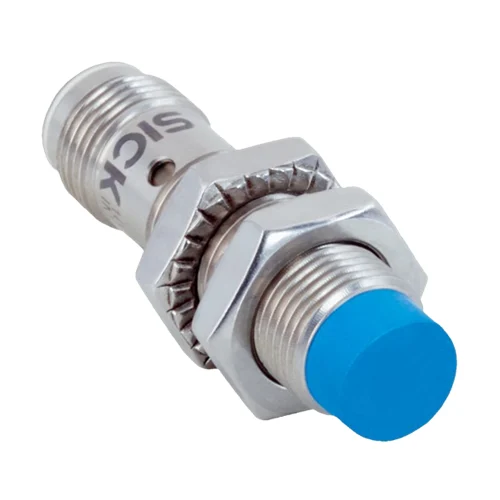
A machining fixture can bring a metal clamp target toward the non-flush sensing face at its intended seated position. Coolant-lubricant resistance and the V2A/LCP construction support a sensing location near the process. External sequencing logic samples the NPN normally open signal after the clamp settles, accounting for actual target material, gap and the documented installation clearances.
Problem Solved
A metal clamp-position reference helps external sequencing logic distinguish a seated target from an intermediate position, supporting the next machine operation in a coolant-exposed fixture.
Clamp position
Coolant resistance
NPN NO
2. Counting separated metal features on a feed wheel
A feed wheel can carry separated metal features across the inductive field and send NPN state transitions to an external counter. The 2,000 Hz switching rating supplies the sensor frequency basis. Setup establishes feature width, separation and working gap so successive features produce distinct events, with external logic selecting the event edge appropriate to the normally open output.
Problem Solved
Distinct metal-feature transitions provide external counting logic with a feed-related event stream, helping track machine cycles without depending on an optical mark or surface color.
Metal-feature counting
2,000 Hz
NPN NO
3. Checking a metal insert in an indexed assembly nest
An assembly nest can hold an expected metal insert within the commissioned sensing zone while nearby tooling remains outside the documented installation clearances. External inspection logic samples the NPN state during the stationary inspection window and interprets it according to the specified normally open output. Reproducibility conditions and material reduction factors provide the basis for evaluating repeated target presentations.
Problem Solved
An inductive insert-present reference helps external inspection logic identify an empty nest before assembly continues, using metal detection rather than printed appearance or target color.
Insert inspection
Stationary sampling
Material factors