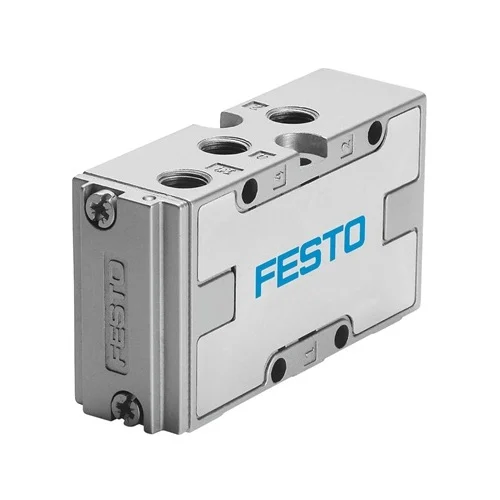
1. High-Speed Defect Ejection in Packaging Conveyor Systems
Utilized to control a double-acting pneumatic cylinder that quickly ejects defective packages from a fast-moving conveyor line. The valve receives a pneumatic pilot signal to actuate the cylinder, instantly pushing the rejected item off the belt.
Problem SolvedOvercomes the challenge of slow response times in mechanical sorting systems by providing near-instantaneous pneumatic actuation, ensuring high-speed throughput without bottlenecking the fast-paced packaging line.
2 ms switching time on5/2-way, monostable750 l/min flow ratePneumatic actuation
2. Fail-Safe Workpiece Clamping in Woodworking Machinery
Integrated into automated assembly jigs to control the pneumatic clamps holding wooden components during CNC routing or drilling. The poppet valve design handles the demanding industrial environment, while the mechanical spring ensures the clamp returns to its default state upon signal removal.
Problem SolvedAddresses the need for reliable clamping in dusty environments where air may contain particulates or lubricants, preventing valve jamming. The mechanical spring reset ensures safe retraction of the clamp if the pilot air signal drops.
Poppet seat designMechanical spring resetLubricated operation possible0 bar ... 10 bar operating pressure
3. Hazardous Area Process Valve Actuation
Employed as a directional control valve to actuate larger double-acting process valves (such as butterfly or ball valves) in chemical processing zones where electrical components are restricted. It relies entirely on external pneumatic pilot signals to switch.
Problem SolvedEliminates the spark and ignition risks associated with electrical solenoid valves in potentially explosive, wet, or chemically harsh environments by utilizing a purely pneumatic, electrically-isolated control method.
Type of actuation: PneumaticExternal pilot air supplyDie-cast aluminium housingPilot pressure 1.5 bar ... 8 bar