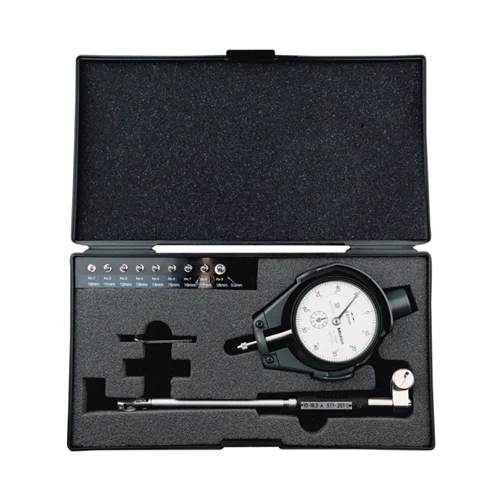
1. Automotive Engine Cylinder and Valve Guide Inspection
During automotive engine rebuilds or manufacturing, valve guides and small cylinders with diameters between 10mm and 18.5mm must be checked for wear, taper, and out-of-roundness. The ±5 µm accuracy and 100 mm probing depth of this bore gauge allow technicians to measure deep inside the guide.
Problem SolvedEnables detection of micro-level wear and ovality in engine valve guides, preventing oil consumption and compression loss by ensuring parts meet precise OEM tolerances.
Valve GuideTaperOut-of-roundnessCylinder OvalityAutomotive Metrology
2. Precision Hydraulic Valve Sleeve Metrology
Hydraulic spool valves rely on extremely tight clearances between the spool and sleeve (typically 10-18mm bore diameter) to prevent fluid leakage. This gauge, with its 2 µm repeatability, allows quality inspectors to verify internal diameters at various depths.
Problem SolvedPrevents internal hydraulic fluid bypass by verifying bore cylindricity and diameter within a ±5 µm limit, ensuring optimal pressure holding capacity.
Hydraulic SpoolValve SleeveCylindricityInternal DiameterFluid Power Assembly
3. Aerospace Bushing and Fastener Hole Verification
Aerospace assemblies utilize small precision bushings (range 10-18.5 mm) that require high-tolerance interference fits. The tool’s thermally insulated grip reduces user-induced measurement drift by 50% during long inspection runs, allowing accurate confirmation of critical hole sizing.
Problem SolvedEliminates assembly failures caused by thermal drift during manual measurements, ensuring precise press-fit tolerances for critical aerospace structural bushings.
Interference FitStructural BushingThermal DriftAerospace ToleranceManual Inspection