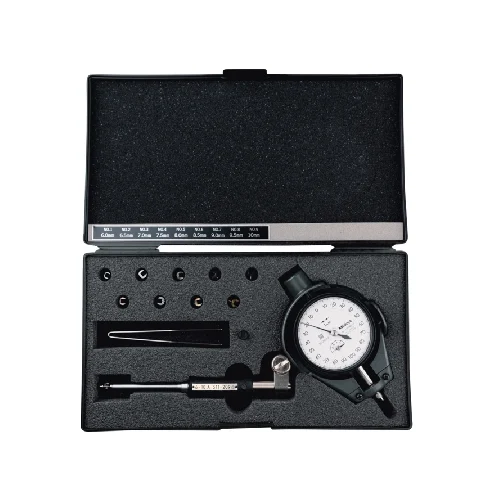
1. Automotive Valve Guide and Cylinder Inspection
High-precision measurement of engine valve guides and small cylinder bores during manufacturing or rebuilds. Valve guides typically have nominal diameters within the 6–10 mm range and require strict dimensional adherence.
Problem SolvedInaccurate valve guide bores lead to oil leakage, engine vibration, or valve seizure. This bore gauge's 0.001 mm resolution and two-point contact system allow technicians to check for taper and ovalness deep within the guide (up to 50 mm depth), ensuring tight tolerances are met.
valve guidecylinder boretaperovalnessout-of-roundnessengine rebuilding
2. Precision Hydraulic and Pneumatic Valve Block Manufacturing
Checking the internal diameters of spool bores in hydraulic valve bodies. These bores control fluid flow and require extremely precise clearances to prevent internal pressure leakage while allowing free spool movement.
Problem SolvedInternal leakage or spool sticking in hydraulic systems occurs if valve bores are out of round or off-size. The 511-210-20 provides ±5 µm accuracy to verify the 6–10 mm spool bores, and its low 2 N measuring force prevents scratching the highly finished honed surfaces of the valve block.
spool borehydraulic valve blockhoned surfaceclearance fitfluid power
3. Aerospace Precision Fastener and Bushing Hole Metrology
Quality control inspection of aircraft fuselage and wing structure fastener holes and installed guide bushings prior to bolt insertion.
Problem SolvedOversized or tapered rivet/fastener holes can compromise structural integrity under stress. The gauge's insulated grip reduces thermal expansion errors from the operator's hands during long inspection shifts, ensuring repeatable 2 µm measurements in controlled aerospace assembly environments.
bushing holefastener holeaerospace metrologythermal insulationstructural integrity