1. Small-Scale Automated Packaging Machine Control
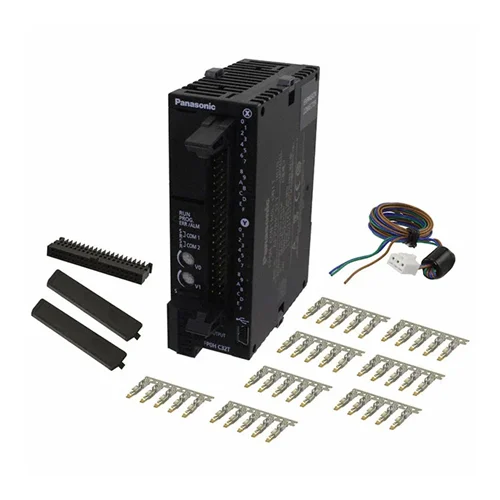
The AFP0HC32T can efficiently manage the sequence of operations in a compact packaging line, such as carton erecting, product insertion, and sealing. Its 32 I/O points are sufficient for controlling sensors (e.g., product detection, box presence) and actuators (e.g., pneumatic cylinders for pushing, motor for conveyor). The fast processing speed ensures precise timing for critical steps like material handling and sealing, minimizing jams and maximizing throughput.
Problem SolvedProvides rapid and reliable sequential control for automated packaging, reducing manual labor and increasing consistency.
Sequential controldigital I/O24VDCfast processingpackaging automation
2. Conveyor System with Sorting and Diverting
This PLC can control a small to medium-sized conveyor system that includes multiple zones, photo-electric sensors for object detection, and solenoid valves for diverting products. The 16 inputs can monitor various sensor states (e.g., item present, position at diverter), and the 16 NPN outputs can activate motor starters for conveyor belts and solenoids for pneumatic diverters. The expandability to 384 I/O allows for future growth of the conveyor line or integration of more complex sorting logic.
Problem SolvedEnables efficient and automated product flow, sorting, and routing on a conveyor line, minimizing manual intervention and errors.
Conveyor controlmaterial handlingdigital inputsNPN outputsexpandable I/O24VDC
3. Machine Tool Ancillary Control (e.g., Coolant System, Tool Changer)
The AFP0HC32T is suitable for managing ancillary functions of a larger machine tool, such as controlling a coolant delivery system (pumps, valves, level sensors) or a simple automatic tool changer mechanism. Its 24VDC compatibility is standard in industrial control panels, and the discrete I/O can handle solenoid valves for coolant flow, motor starters for pumps, and limit switches for tool changer position feedback. The RS-232C port could potentially be used for communication with a human-machine interface (HMI) for status display and basic control.
Problem SolvedAutomates non-core but essential functions of industrial machinery, freeing up the main machine controller for primary tasks and improving overall machine efficiency and safety.
Machine automationcoolant controltool changerdiscrete I/O24VDCRS-232C communication