Sale!

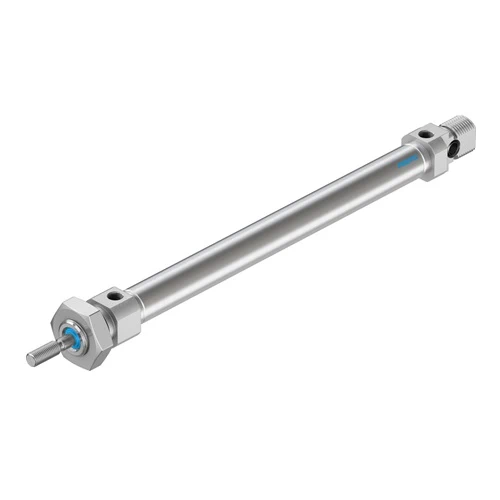
Festo 19188 ISO Cylinder, 10 mm Bore, 100 mm Stroke

Original price was: USD 40.82.Current price is: USD 35.88.

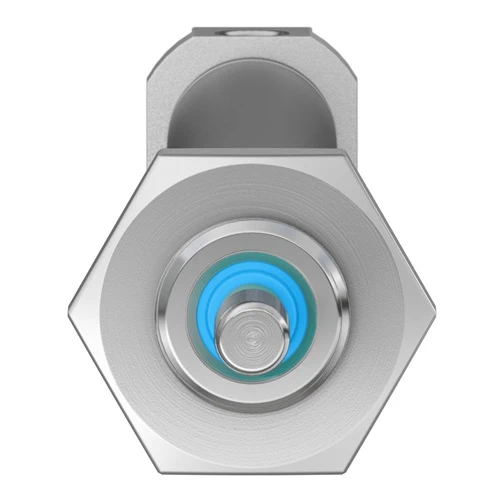
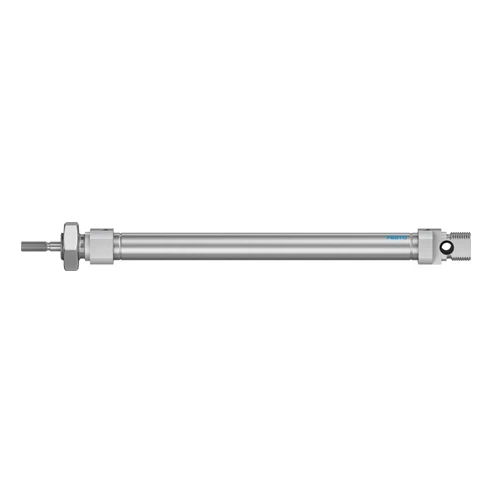
ISO 6432 double-acting cylinder with elastic end cushioning, M5 ports, M4 piston-rod thread and high-alloy stainless steel barrel and piston rod.

SKU Festo-19188 Category
Festo Piston Rod Cylinders

Festo DSNU-10-100-P-A ISO Pneumatic Cylinder

BrandFesto
Model IdentifierDSNU-10-100-P-A
Official Part Number19188

Technical Overview

The Festo DSNU-10-100-P-A is a double-acting ISO 6432 pneumatic cylinder with a 10 mm piston diameter and 100 mm stroke. Elastic cushioning rings or plates at both ends cushion end-position contact in the compact cylinder arrangement. M5 pneumatic ports supply compressed air over a 1.5–10 bar operating range, while the male M4 piston-rod thread provides a mechanical attachment interface. Proximity switches can detect position, and the theoretical advancing and return forces at 6 bar are 47.1 N and 39.6 N respectively. Its high-alloy stainless steel barrel and rod permit operation within a −20 to +80 °C ambient range.

ISO 6432 double-acting cylinder with 10 mm bore, 100 mm stroke, elastic end cushioning, M5 ports and M4 piston-rod thread.

Key Features

  • ISO 6432 and CETOP RP 52 P cylinder with 10 mm piston diameter
  • Exact 100 mm stroke and double-acting operation
  • Elastic cushioning rings or plates at both ends
  • Male M4 piston-rod thread
  • M5 pneumatic connections and 1.5–10 bar operating range
  • 47.1 N theoretical advance and 39.6 N theoretical return force at 6 bar
  • Position detection via proximity switch
  • High-alloy stainless steel cylinder barrel and piston rod
  • Anodised aluminium-alloy covers; NBR and TPE-U(PU) seals
  • 0.05 J end-position impact energy; −20 to +80 °C ambient range

Provide a 100 mm double-acting stroke in an ISO 6432 cylinder with a 10 mm bore, stainless steel barrel and elastic end cushioning.

Technical Specification Matrix

ParameterValue
Stroke100 mm
Piston diameter10 mm
Piston rod threadM4
CushioningElastic cushioning rings/plates at both ends
Mounting positionAny
Conforms to standardCETOP RP 52 P; ISO 6432
Piston-rod endMale thread
DesignPiston; Piston rod; Cylinder barrel
Position detectionVia proximity switch
VariantsPiston rod at one end
Operating pressure0.15 MPa...1 MPa; 1.5 bar...10 bar
Mode of operationDouble-acting
Operating mediumCompressed air to ISO 8573-1:2010 [7:4:4]
Note on operating and pilot mediumLubricated operation possible (in which case lubricated operation will; always be required)
Corrosion resistance class CRC2 - Moderate corrosion stress
LABS (PWIS) conformityVDMA24364-B1/B2-L
Cleanroom suitability, measured according to ISO 14644-14Class 6 according to ISO 14644-1
Ambient temperature-20 °C...80 °C
Impact energy in end positions0.05 J
Theoretical force at 0.6 MPa (6 bar, 87 psi), return stroke39.6 N
Theoretical force at 0.6 MPa (6 bar, 87 psi), advance stroke47.1 N
Moving mass for 0 mm stroke8.5 g
Additional moving mass per 10 mm stroke1 g
Reference mass for 0 mm stroke37.3 g
Incremental mass per 10 mm stroke2.7 g
Type of mountingWith accessories
Pneumatic connectionM5
Note on materialsRoHS compliant
Material coverWrought aluminium alloy; Colourless anodised
Material sealsNBR; TPE-U(PU)
Material piston rodHigh-alloy stainless steel
Material cylinder barrelHigh-alloy stainless steel

Industrial Applications

1. Linear Part-Ejection Mechanism

An assembly machine ejects a completed lightweight part from a fixture through a defined linear movement. The cylinder supplies a 100 mm double-acting stroke, with the M4 rod thread connecting to the ejector mechanism. Elastic elements cushion both end positions, while proximity switches can provide the machine sequence with cylinder-position signals.

Problem Solved

A defined powered stroke and return movement support repeatable ejector sequencing, with threaded attachment and proximity-switch detection linking the cylinder to the surrounding mechanism and controls.

100 mm stroke Double acting M4 rod thread

2. Pneumatic Clamp Movement in an Assembly Fixture

A workstation moves a mechanical clamp into and out of position during part loading. The cylinder provides 47.1 N theoretical advancing force and 39.6 N theoretical return force at 6 bar, giving the builder a documented actuator-force basis for the clamp linkage. Its double-acting operation powers both movements, while M5 ports connect the fixture's directional-control circuit.

Problem Solved

Published theoretical forces and powered motion in both directions support sizing a pneumatic clamp linkage, rather than assuming the same force is available on advance and return.

47.1 N theoretical advance 39.6 N theoretical return M5

3. ISO-Format Conveyor Diverter Actuation

A conveyor installation uses a linkage to move a small diverter between product routes. The ISO 6432 cylinder provides an established cylinder format, a 100 mm stroke and elastic end cushioning. Accessory mounting connects it to the machine structure, and proximity-switch position detection can indicate completion of each movement to the conveyor sequence.

Problem Solved

The ISO cylinder format supports mechanical integration, while elastic end cushioning and position-detection provision help coordinate the diverter movements with the conveyor control sequence.

ISO 6432 Elastic cushioning Position detection

Select your currency