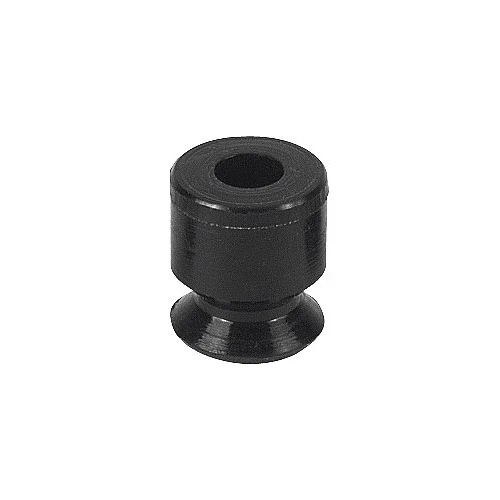
1. Small-Component Pickup from a Fixture
An assembly fixture needs a small vacuum contact to lift a component with a sealable surface. The 6 mm round flat cup provides the contact geometry, and its 1.1 N holding-force rating at −0.7 bar defines the documented grip reference. The 15 mm minimum workpiece radius limits the curvature of a contact surface when the component is not flat.
Problem Solved
A small flat vacuum contact accesses a limited gripping area, with the nominal holding-force and surface-curvature data defining the cup’s documented basis for the pickup task.
6 mm flat cup
1.1 N at −0.7 bar
15 mm minimum radius
2. Antistatic Contact for Electronics Assembly Handling
An electronics assembly station needs a vacuum contact made from antistatic material when moving a small component with a suitable sealing surface. The SNA cup uses NBR with a specified surface resistance of 200 Ω. Its 6 mm diameter provides a small contact footprint, while the handling system’s complete electrostatic-control performance depends on the remaining tooling and installation.
Problem Solved
The antistatic NBR contact provides the documented low-resistance cup material for the handling tool, supporting an electrostatic-control design without assigning a system-level protection rating to the cup alone.
Antistatic NBR
200 Ω surface resistance
6 mm diameter
3. Ejector-Pulse Release after Placement
A pick-and-place mechanism needs to release a small part after positioning it in its destination nest. This cup is specified as suitable for a 4 bar ejector pulse and has a suction volume of 0.015 cm³. A top vacuum connection supplies the vacuum and release path, allowing the pneumatic sequence to change from holding to part separation.
Problem Solved
Ejector-pulse suitability provides a documented pneumatic release mechanism at the suction contact, supporting part separation after placement rather than relying only on the removal of vacuum.
4 bar ejector pulse
0.015 cm³ cup volume
Top vacuum connection