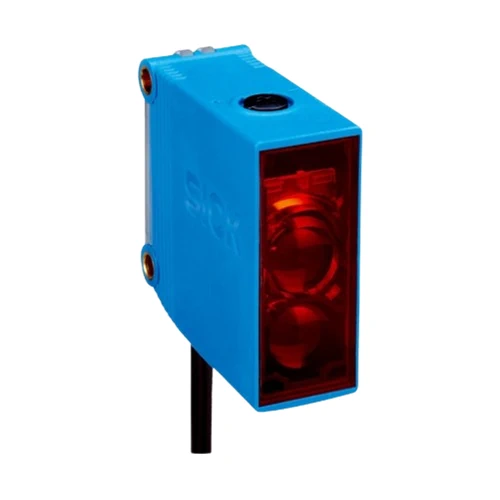
1. Checking a component at a loading fixture
A loading fixture can present an opaque component surface at a repeatable gap within the checked energetic sensing range. External sequencing logic reads the isolated relay contact after the component settles. Commissioning adjusts sensitivity using representative parts and checks target reflectance, empty-fixture return and the selected contact state, with the connected load kept within its voltage-specific rating.
Problem Solved
A component-present reference helps external sequencing logic distinguish a loaded fixture from an empty position, using reflected infrared light and an isolated contact checked for the actual installation.
Fixture presence
Infrared sensing
Isolated contact
2. Counting separated loads on a slow conveyor
A slow conveyor can carry separated opaque loads past the reflected-light sensing point and feed relay transitions to external counting logic. Setup adjusts sensitivity using the expected load surfaces, checks background reflections and verifies that dwell times and load gaps suit the 10 ms response and 20 Hz switching conditions. The contact circuit also respects the voltage-specific switching loads and suppression requirements.
Problem Solved
A load-passage reference helps external counting logic register separated items on a checked slow conveyor, using a relay interface matched to actual timing and contact-loading conditions.
Slow-conveyor counting
Relay transitions
Timing checks
3. Monitoring opaque strip presence at a feed station
A feed station can keep an opaque strip surface within the sensor’s adjusted energetic working gap while external process logic evaluates relay state for material presence. Commissioning checks actual surface remission, strip flutter and the empty-path background. Control timing accounts for the specified response and switching frequency, and the relay circuit uses suitable load suppression where required.
Problem Solved
A strip-presence reference helps external process logic recognize loss of opaque material at the checked station, using adjusted reflected-light sensing and a properly loaded isolated relay contact.
Strip presence
Energetic sensing
Relay interface