1. Precision Quality Control in Metal Machining Workshops
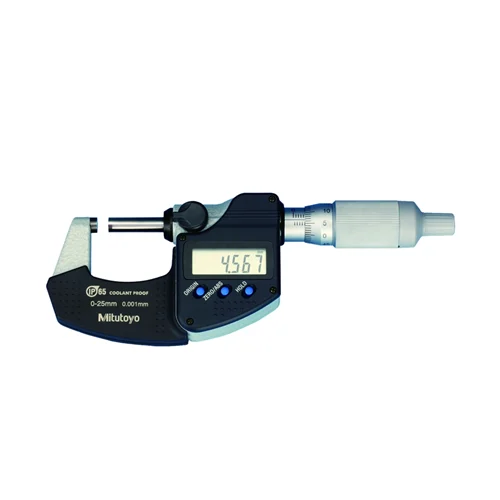
In metal machining workshops, workpieces such as precision pins, shafts, and automotive engine parts are machined down to tight tolerances. Machinists can use this micrometer directly on the shop floor to measure workpiece dimensions.
Problem SolvedCutting fluid, lubricating oil, and metal dust can easily destroy normal electronic measuring tools or cause reading drift. The IP65 rating and oil-resistant plastic construction of the 293-244-30 allow machinists to perform highly accurate measurements (±1 µm accuracy) directly inside CNC enclosures or next to lathes without wiping parts completely dry, reducing inspection cycle times.
CNC MachiningOutside Diameter MeasurementCutting Fluid ResistanceIP65 Rating±1 µm Accuracy
2. Automotive Component Stamping and Thickness Auditing
Stamping facilities require frequent verification of sheet metal and component thicknesses to ensure structural integrity and compliance with design tolerances.
Problem SolvedVariations in clamping force can lead to measurement inconsistencies among different operators. The 293-244-30 utilizes a ratchet thimble that provides a constant measuring force of 7–12 N. This ensures highly repeatable, operator-independent measurements of stamped parts on the factory floor, preventing false rejects or accepting out-of-spec products.
Thickness VerificationRepeatable Clamping ForceRatchet ThimbleSheet Metal StampingTolerancing
3. Hydraulic Valve Spool Precision Grinding
Hydraulic systems operate at high pressures and require extremely tight clearances between valve spools and bodies. During the spool grinding process, diameters must be monitored down to the micrometer level.
Problem SolvedThermal expansion from holding the micrometer can introduce measurement errors. The 293-244-30 features a highly stable frame with a built-in heat shield that minimizes heat transfer from the operator's hands. Combined with the micro-lapped carbide-tipped measuring faces, it prevents thermal drift and wear, ensuring the valve spools are ground exactly to within the ±1 µm tolerance limit.
Hydraulic ValvesValve Spool GrindingThermal Expansion PreventionCarbide-Tipped AnvilsPrecision Metrology