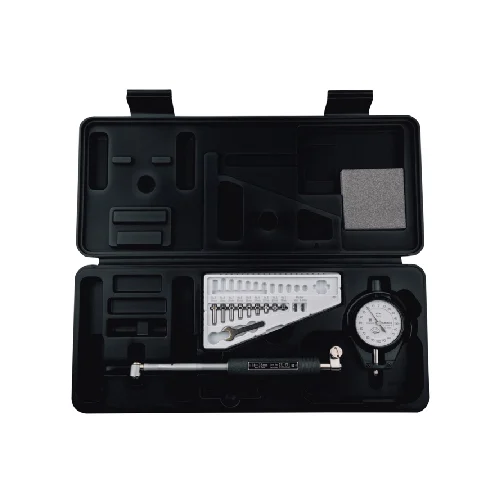
1. Automotive Engine Cylinder Reboring Quality Control
Measuring engine block cylinder bores (typically within the 35–60 mm range for smaller engines, motorcycles, or auxiliary pumps) to check for taper, out-of-roundness, and wear before and after reboring/honing.
Problem SolvedMechanics must ensure that the cylinder walls are perfectly circular and straight to prevent blow-by and oil consumption. The 511-722-20 solves this with its 0.5 µm repeatability and 2-point contact system, detecting minimal geometry anomalies.
Cylinder BoreOut-of-roundnessTaper MeasurementHoning MetrologyInternal Diameter
2. Precision Hydraulic Cylinder Sleeve Inspection
Quality assurance of small-bore hydraulic cylinder sleeves (inner diameter 35–60 mm) to verify internal tolerances before installing seals and pistons.
Problem SolvedMicroscopic taper or ovality in hydraulic cylinders causes fluid bypass and seal degradation. The 150 mm probing depth and 1.2 mm plunger stroke allow deep inspection into the cylinder to confirm uniform diameter, preventing hydraulic pressure drop.
Hydraulic SleeveSeal Seat VerificationOvality DetectionProbing DepthMicrometer Tolerance
3. Precision Bearing Journal Alignment & Sizing
Checking inside diameters of bearing housings and journals in turbine or transmission systems where high-tolerance press fits are required.
Problem SolvedFor high-speed aerospace bearings, a discrepancy of more than a few micrometers in housing diameter leads to premature bearing failure. The gage's ±2 µm accuracy and 0.001 mm graduation allow operators to measure press-fit bores with extreme confidence.
Bearing JournalPress-Fit ToleranceInternal Diameter MetrologyClose-Tolerance MachiningThermal Stability Grip