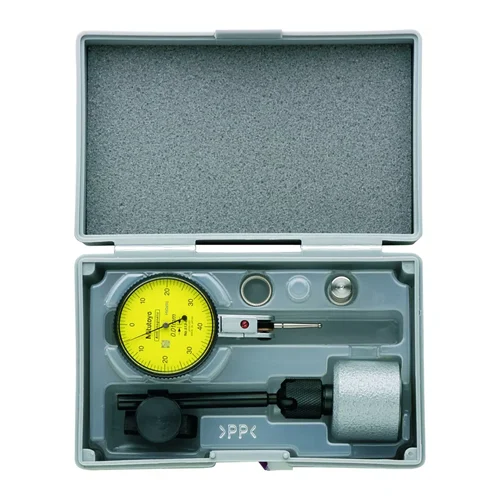
1. CNC Spindle Runout and Alignment Calibration
Utilized to verify the axial and radial concentricity of machining center spindles to prevent tool runout.
Problem SolvedAligning heavy machinery spindles requires micron-level detection. The 0.01mm resolution combined with the 150N mini magnetic stand allows rigid mounting onto the machine frame to read sub-micron deviations during manual rotation, reducing part defects and tool wear.
Spindle RunoutCNC CalibrationConcentricityAlignmentMini Magnetic Stand
2. Quality Control Inspection of Recessed Undercuts
Inspecting internal diameters, groove geometry, and recessed surfaces in high-precision machined metal components.
Problem SolvedStandard plunge dial indicators cannot reach inside tight channels or deep counterbores. The 17.4mm horizontal carbide stylus and automatic direction-reversing lever make it simple to track surface variations across difficult internal geometries in the QC lab.
Undercut MetrologyLever Type IndicatorCarbide StylusInternal GeometryQuality Control
3. Engine Block and Cylinder Head Flatness Verification
Sweeping across critical engine block and head mating faces during precision remanufacturing to map flatness.
Problem SolvedMeasuring flatness on delicate machined aluminum or iron faces can cause surface marking or indicator sticking. The extremely low 0.3N measuring force prevents scratching, while the jeweled bearings eliminate stiction, ensuring a smooth, continuous sweep to verify a perfect head gasket seal.
Surface FlatnessEngine MetrologyLow Measuring ForceJeweled BearingsBalanced Dial