1. Industrial Control System Integration
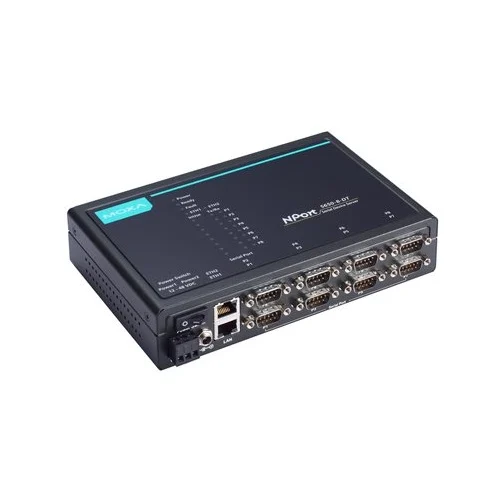
Connecting legacy RS-232/422/485 based PLCs, sensors, and actuators to modern Ethernet-based control networks in a factory automation environment. The 8 serial ports allow for centralized management of multiple devices.
Problem SolvedIntegrates diverse serial industrial equipment into a unified Ethernet network, overcoming incompatibility issues and enabling remote monitoring and control. The 2kV isolation protects sensitive control systems from electrical noise.
PLC connectivitySCADA integrationFactory AutomationSerial to Ethernet2 kV Isolation
2. Remote Monitoring in Harsh Environments
Deploying the device server in outdoor substations, oil and gas pipelines, or unconditioned industrial cabinets to collect data from serial devices (e.g., meters, RTUs) and transmit it over Ethernet. The wide operating temperature range (-40 to 75°C) and robust metal housing are critical.
Problem SolvedEnsures reliable data communication and network access for serial devices in extreme temperatures and electrically noisy outdoor or industrial settings, where standard equipment would fail.
Remote RTU monitoringOutdoor industrial applicationsWide temperature rangeRS-485 long distanceRobust connectivity
3. Building Management Systems (BMS)
Interfacing various serial-based building automation devices such as HVAC controllers, access control systems, and power meters to the building's IP network. The dual Ethernet ports facilitate daisy-chaining multiple units, simplifying wiring infrastructure.
Problem SolvedModernizes building infrastructure by bridging older serial equipment with IP networks, enabling central control and data logging. The dual Ethernet ports reduce cabling and switch port requirements in large installations.
HVAC controlAccess control integrationBuilding AutomationDual EthernetSerial device networking