1. Automated Paper Feed Control in Printing Presses
In high-speed printing operations, ensuring only a single sheet of paper is fed into the press at a time is critical to prevent machine jams, misprints, and material waste.
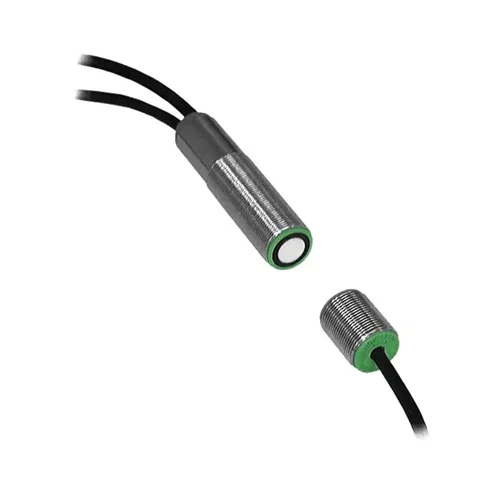
Problem SolvedThis sensor precisely detects if no sheet, one sheet, or a double sheet is present within its 20-60mm sensing range. The 3 PNP outputs can directly interface with PLCs to stop the feed mechanism or trigger an alarm upon double-sheet detection, protecting expensive machinery and ensuring print quality. Its insensitivity to printing and colors and ability to handle various paper weights (up to 2000 g/m²) make it ideal for diverse paper types.
PrintingPaper FeedDouble Sheet DetectionMachine ProtectionPLC IntegrationPNP Output20-60mm SensingMaterial Weight
2. Metal Sheet Separation in Stamping or Forming Lines
In metal fabrication, particularly with thin sheet metals, ensuring that only one sheet is picked by robotic arms or fed into a stamping machine is crucial for preventing die damage and product defects.
Problem SolvedThe sensor's ability to reliably detect single or double sheets of even thin metals and foils (up to 2000 g/m²) provides a robust solution. The IP67 rating ensures it can withstand typical industrial environments with dust or lubricants. Its 18-30V DC operation is standard for industrial automation, allowing easy integration into existing control systems to halt operations if multiple sheets are present.
Metal FabricationStampingSheet MetalDouble Sheet PreventionIP67Industrial AutomationRobotic Pick-and-PlacePNP Output
3. Automated Quality Control in Packaging Lines
Packaging lines often involve folding and sealing cardboard or other flexible materials. Detecting if multiple layers are incorrectly stacked or if a sheet is missing before critical processing steps can prevent defective products.
Problem SolvedThe sensor can monitor the thickness of packaging material (e.g., cardboard, plastic foils) within its optimal 20-60mm range to ensure consistency. Its insensitivity to colors and printing is beneficial for varied packaging designs. The quick response time (approx. 15ms) allows for high-speed line integration, and its programmable nature allows for fine-tuning to different material specifications.
Packaging AutomationQuality ControlMaterial ThicknessCardboardPlastic FoilsHigh-Speed ProductionProgrammablePNP Output