1. Industrial Control Panels in Harsh Environments
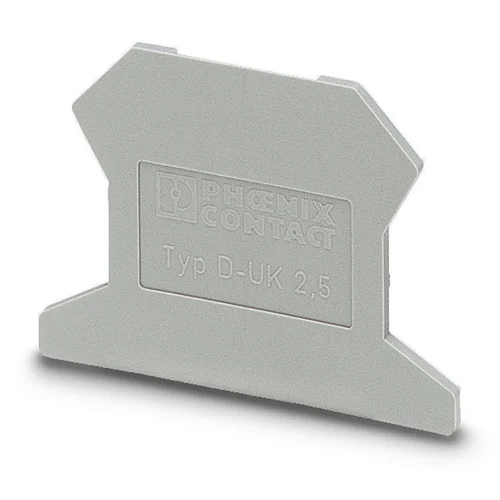
This end cover is ideal for providing robust insulation and protection for terminal blocks within industrial control panels located in environments with extreme temperatures, such as those found in heavy machinery or outdoor installations.
Problem SolvedPrevents electrical short circuits and ingress of dust/debris into exposed terminal blocks, maintaining circuit integrity and operational safety under wide temperature fluctuations (-60 °C to 110 °C). The UL 94 V0 flammability rating ensures enhanced fire safety in critical control systems.
Industrial controlDIN railterminal block insulationextreme temperaturedust protectionUL 94 V0electrical safety
2. Railway and Transportation Systems
Suitable for use in electrical systems for railway applications, where components must meet stringent fire protection standards. The D-UK 2,5 end cover provides a secure and fire-resistant termination for DIN rail mounted terminal blocks.
Problem SolvedEnsures compliance with railway fire protection standards (DIN EN 45545-2 R22, R23, R24, R26) by preventing fire propagation and minimizing smoke toxicity in confined spaces, while reliably insulating terminal blocks against vibration and temperature variations.
Railway applicationsfire protectionDIN EN 45545-2vibration resistanceelectrical insulationterminal block security
3. Process Automation in Chemical or Manufacturing Plants
Used in process automation cabinets in manufacturing or chemical plants, where reliable electrical connections are essential, and components might be exposed to varying ambient conditions.
Problem SolvedProvides a durable and chemically resistant barrier for terminal blocks, protecting against potential corrosive elements or high humidity (20% to 90% permissible humidity) within industrial settings. Its robust polyamide construction and wide temperature range ensure long-term stability and operational reliability.
Process automationchemical resistancehigh humidityelectrical connection integrityindustrial cabinetspolyamidetemperature stability