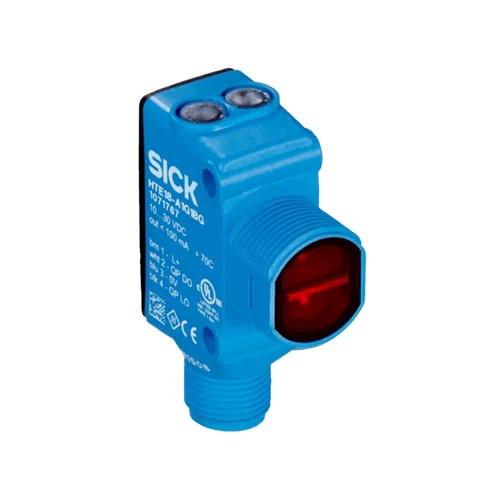
1. Checking a dark component ahead of a fixture background
An assembly fixture can present a dark component within the adjusted sensing zone while a farther fixture surface remains behind it. Background suppression establishes the target condition from one mounting side, and the right-hand potentiometer sets the working range. The 5–150 mm reference-black specification informs setup with the actual component, while external inspection logic samples either the PNP or NPN light-switching signal after presentation.
Problem Solved
A background-suppressed reflected-light condition gives external inspection logic a component-present reference, helping distinguish a loaded fixture position from the farther surface behind it.
Dark-component check
Background suppression
Range potentiometer
2. Counting separated parts on a short feed track
A feed track can move separated opaque parts through the red sensing spot and send the selected PNP or NPN transitions to an external counter. The documented 1,000 Hz switching and response no greater than 0.5 ms define the sensor timing basis. Target size, actual remission and spacing determine distinct passages, with the range potentiometer placing the intended track location inside the sensing zone.
Problem Solved
Discrete reflected-light transitions give the external counter part-passage events, helping track separated components along a short feed path without installing an opposed receiver.
Part counting
1,000 Hz
PNP or NPN
3. Comparing optical signal strength during setup maintenance
A maintenance check can present the same representative component at the established sensing position and compare the signal-strength light bar before and after cleaning or realignment. The green power and yellow received-light indicators provide additional local observations. The right-hand range adjustment retains the intended target zone, while external control readings show whether the light-switching output follows the expected presentation.
Problem Solved
A local signal-strength display helps maintenance assess changes in the received optical condition and the effect of cleaning or alignment work using the same reference target.
Signal-strength bar
Reference-target check
Local indication