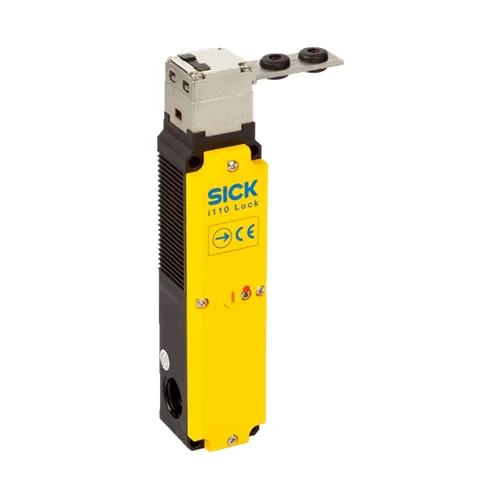
1. Retaining a process access door during a powered production step
A production station can energize the solenoid after its access guard closes, retaining the inserted actuator during a controlled process step. The external controller evaluates the lock contacts and removes coil power at the permitted release point. Because loss of coil voltage unlocks immediately, this power-to-lock behavior must be included in the machine sequence and risk assessment.
Problem Solved
Electrically controlled retention lets the external controller coordinate process access with a production step, using separate lock feedback to distinguish commanded locking from the observed contact state.
Powered retention
Lock feedback
Controlled process access
2. Separating guard closure from machine restart permission
A machine access sequence can evaluate door-monitoring contacts separately from the positive-action lock-monitoring contacts. The connected safety-related logic checks the required closed and locked conditions before accepting a separate start command. Closing or locking the guard does not itself initiate motion, allowing the machine control to distinguish physical closure from deliberate operator restart.
Problem Solved
Separate door and lock information helps the external control establish the required access conditions before a deliberate restart, avoiding automatic machine starting merely from closing the guard.
Separate restart command
Door monitoring
Lock monitoring
3. Checking door and lock signals during commissioning and maintenance
During a controlled commissioning or maintenance check, external diagnostic logic can observe door and lock contact states as the guard is closed, the solenoid is energized and the guard is released. Comparing the separate signals with the commanded sequence helps expose an unexpected condition in the installed circuit. Fault detection belongs to the connected safety-related logic, rather than an internal diagnostic function of this switch.
Problem Solved
Independent door and lock observations give external diagnostic logic evidence for identifying a disagreement between commanded operation and the installed contact circuit during a controlled functional check.
Functional checking
External diagnostics
Separate contact states