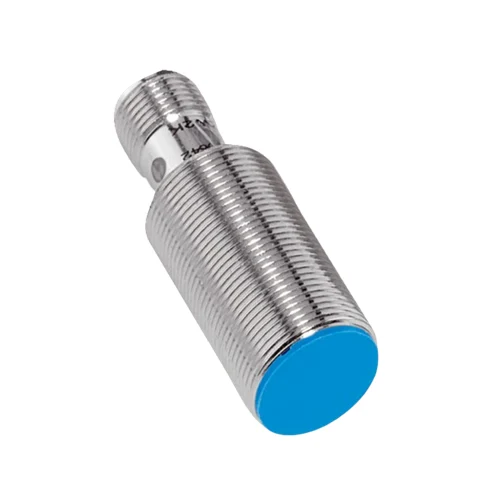
SICK 1040965 IME18-08BPSZC0K M18 PNP NO Inductive Sensor

USD 26.00

IME18-08BPSZC0K offers 8 mm nominal and 6.48 mm assured inductive range, flush M18 mounting, PNP normally open output and M12 connection.

SKU SICK-1040965 Category
SICK IME

SICK IME18-08BPSZC0K M18 PNP NO Inductive Sensor

BrandSICK
Model IdentifierIME18-08BPSZC0K
Official Part Number1040965

Technical Overview

The SICK IME18-08BPSZC0K is a short-body M18 × 1 inductive proximity sensor for flush installation. It has an 8 mm nominal sensing range and 6.48 mm assured range, with reference reduction factors for different target metals. The PNP normally open output uses DC three-wire wiring and supports 1,000 Hz switching. Connection is through an M12 four-pin male connector to a 10–30 V DC supply. The nickel-plated brass housing and PA66 sensing face provide IP67 protection, with ambient operation from −25 to +75 °C. Housing length is 50 mm and thread length is 33 mm; two nickel-plated brass mounting nuts are supplied.

Flush M18 short-body inductive sensor with 8 mm nominal range, PNP normally open output and M12 four-pin male connector.

Key Features

  • M18 × 1 short-body housing for flush installation
  • 8 mm nominal range; 6.48 mm assured range
  • PNP normally open output; DC three-wire circuit
  • 1,000 Hz switching frequency
  • M12 four-pin male connector; pin 2 not connected
  • 10–30 V DC; output current ≤200 mA; no-load current ≤10 mA
  • Short-circuit protection and power-up pulse protection
  • Nickel-plated brass housing; PA66 sensing face; IP67
  • 50 mm housing length; 33 mm thread; maximum tightening torque ≤40 Nm
  • Two nickel-plated brass mounting nuts, 24 mm across flats; −25 to +75 °C operation

Use flush M18 mounting and a PNP normally open condition to monitor a metal target within the verified target-dependent sensing range.

Technical Specification Matrix

ParameterValue
Functional principleInductive proximity sensor
Housing designShort-body
Mounting threadM18 × 1; Ø18 mm
InstallationFlush
Nominal sensing range Sn8 mm
Assured sensing range Sa6.48 mm
Switching frequency1,000 Hz
Switching outputPNP; normally open
Electrical circuitDC three-wire
ConnectionAn M12 four-pin male connector
Power supply10–30 V DC
Ripple≤10%
Voltage drop≤2 V at maximum continuous output current
Availability delay≤100 ms
Hysteresis5–15%
Reproducibility≤2% of Sr with constant supply voltage and ambient temperature
Temperature drift±10% of Sr
EMCEN 60947-5-2
Continuous output current≤200 mA
No-load current≤10 mA
Circuit protectionShort-circuit protection; power-up pulse protection
Shock resistance30 g, 11 ms
Vibration resistance10–55 Hz, 1 mm
Operating temperature−25 to +75 °C
Housing materialNickel-plated brass
Sensing face materialPA66 plastic
Housing length50 mm
Thread length33 mm
Maximum tightening torque≤40 Nm
Items suppliedTwo nickel-plated brass mounting nuts; 24 mm across flats
IP ratingIP67 to EN 60529
UL fileNRKH.E181493
MTTFD1,735 years
DCavg0%
Material reduction factorsReference values, may vary: St37 steel 1; stainless steel V2A/304 approximately 0.8; aluminum approximately 0.45; copper approximately 0.4; brass approximately 0.4
Installation spacingB=36 mm; C=18 mm; D=24 mm; F=64 mm; apply manufacturer flush-installation diagram
Pin assignmentCD-007: 1 BN=L+; 4 BK=NO; 3 BU=M; pin 2 not connected

Industrial Applications

1. Confirming a seated metal fixture target

An assembly fixture can present a metal reference target beside the flush M18 sensing face and read the PNP normally open condition after seating. The 6.48 mm assured range provides the documented distance reference. Setup checks target material, actual gap and installation spacing so the seated and withdrawn positions produce distinct external input states.

Problem Solved

A metal-target condition helps external fixture sequencing distinguish seating from withdrawal, using the documented normally open output and installed target geometry as the position reference.

Fixture position Flush M18 PNP NO

2. Counting separated metal parts at a feed point

A guided feed can pass separated metal parts through the sensing zone and evaluate transitions with an external counter. The 1,000 Hz rating establishes the sensor timing basis, and external logic interprets the normally open output accordingly. Commissioning checks part size, material reduction, speed and spacing so each part produces one distinguishable passage event.

Problem Solved

Distinct inductive transitions provide external counting logic with metal-part passage events, helping track the feed quantity at a fixed sensing point independently of optical surface contrast.

Metal part count 1,000 Hz Feed passage

3. Timing the return of a cyclic mechanism

A cyclic mechanism can carry a metal flag past the sensing face at its expected return position. External monitoring compares the PNP normally open transition with the normal sequence interval to identify a late or missing event. Setup fixes the sensing location and checks the installed gap and target material against the verified inductive range.

Problem Solved

A timed metal-reference event helps external monitoring distinguish ordinary mechanism return from a stalled or delayed movement, using the installed sensing location as its process reference.

Return timing Metal reference Cyclic movement

Select your currency