1. Campus Network Edge and Aggregation Layer Routing
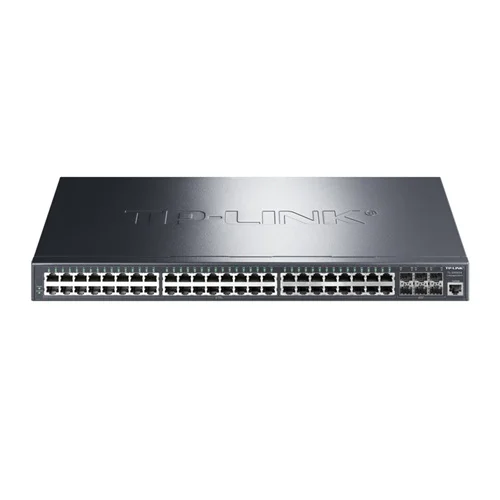
In large educational facilities, managing data traffic across multiple buildings requires high-density switches that can handle thousands of concurrent connections. With 48 Gigabit RJ45 ports and 6 10G SFP+ uplinks, this switch acts as an aggregation node. The L3 static and RIP dynamic routing features allow it to handle inter-VLAN routing locally instead of overloading the core firewall.
Problem SolvedEliminates high latency and bottlenecks at the core router by routing traffic between department subnets directly on the switch level, optimizing overall bandwidth utilization.
Inter-VLAN RoutingRIP Protocol10G SFP+Aggregation Layer
2. IP Surveillance Network with High Multicast Traffic
A facility with up to 48 high-definition IP security cameras needs robust bandwidth and efficient multicast control to prevent video stream dropouts. The switch utilizes IGMP Snooping (v1/v2/v3) and MLD Snooping to direct video traffic only to authorized recording servers and client stations.
Problem SolvedPrevents packet flooding and network degradation across non-destination ports by filtering and managing heavy multicast traffic, ensuring continuous and smooth video feeds.
IGMP SnoopingMLD SnoopingMulticast TrafficQoS
3. Secure Network Segmentation in Hospitality Environments
Hotels require robust isolation between guest Wi-Fi, administrative networks, Point of Sale (POS) terminals, and back-office servers. The switch provides Private VLAN, Guest VLAN, and IEEE 802.1Q VLAN configuration, alongside 802.1X port-level authentication to strictly secure each network segment.
Problem SolvedSecures sensitive payment systems and administrative data from potential security breaches originating from guest access points, while allowing centralized management over a single 48-port physical hardware deployment.
Private VLAN802.1X AuthenticationQuadruple BindingNetwork Segmentation