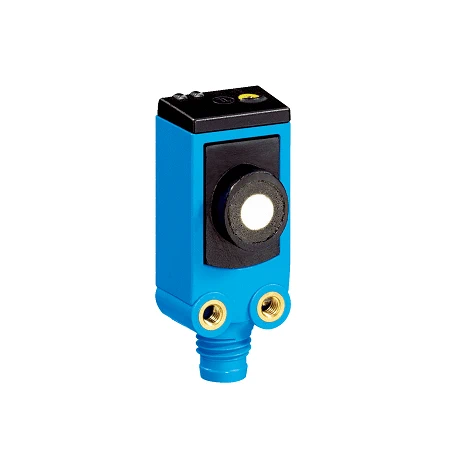
SICK 6054708 UC4-13346 4–20 mA Ultrasonic Sensor

USD 451.62

UC4-13346 offers 20–150 mm ultrasonic operation, one 4–20 mA analog output, teach-in from 21 mm and an IP65/IP67 ABS housing with M8 connection.

SKU SICK-6054708 Category
Ultrasonic Distance Sensors - SICK UC4

SICK UC4-13346 4–20 mA Ultrasonic Sensor

BrandSICK
Model IdentifierUC4-13346
Official Part Number6054708

Technical Overview

The SICK UC4-13346 measures object distance using ultrasonic echoes over a 20–150 mm operating range, with a separate 250 mm limiting range. One 4–20 mA analog output provides a scaled distance signal; local teach-in starts at 21 mm and supports rising or falling output characteristics. The specified 24 ms response can increase by up to 200% because of subsequent analog smoothing, while output time is 8 ms. Internal temperature compensation reaches its optimum after approximately one minute with the standard aluminum bracket and mounting screws. The ABS housing has two LEDs, an M8 three-pin connector and IP65/IP67 protection. Above 50 °C, its rear surface must sit flat against a bracket.

20–150 mm ultrasonic sensor with one 4–20 mA analog output, teach-in from 21 mm, temperature compensation and M8 three-pin connection.

Key Features

  • 20–150 mm operating range; 250 mm limiting range
  • Analog teach-in from 21 mm; rising or falling characteristics
  • One 4–20 mA analog output; 12-bit output resolution
  • Load ≤500 Ω; at supply ≤20 V, maximum load ≤100 Ω
  • 24 ms response; subsequent smoothing may increase it by up to 200%
  • 8 ms output time; typical 380 kHz acoustic frequency
  • Temperature compensation; optimum after approximately one minute
  • 15–30 V DC; ≤0.75 W without load; startup <300 ms
  • Two LEDs; M8 three-pin male connector; M3 mounting threads
  • IP65/IP67 ABS housing; above 50 °C rear must contact bracket flat

Teach an analog distance span and pass the scaled surface-distance signal to external monitoring or process control.

Technical Specification Matrix

ParameterValue
Functional principleUltrasonic distance measurement
Operating range20–150 mm
Limiting range250 mm; distinct from operating range
Minimum teach distance21 mm
Detection areaDepends on target reflection, size and alignment; reference diagrams use aligned 100 × 100 mm plate and Ø10 mm bar
Resolution≥0.1 mm
Repeatability±0.15% of current measured value; minimum value ≥resolution
Measurement accuracy±1% of current measured value
Temperature compensationAvailable; optimum after approximately 1 min; factory calibration uses standard aluminum bracket and mounting screws
Response time24 ms; subsequent analog smoothing may increase response time by up to 200%
Output time8 ms
Ultrasonic frequencyTypical 380 kHz; acoustic frequency
Analog output1 × 4–20 mA; load ≤500 ω; at supply ≤20 v, maximum load ≤100 ω
Analog output resolution12 bit
AdjustmentLocal analog teach-in; rising/falling output characteristics; teach-button deactivation and factory reset
Power supply15–30 V DC; limit values; reverse-polarity protected
Supply network requirementShort-circuit protected network, maximum 8 A
Power consumption≤0.75 W without load
Initialization time<300 ms
IndicatorsGreen: supply active; orange: object within analog scaling range
ConnectionM8 three-pin male connector
Pin assignment1 BN=L+; 3 BU=M/0 V; 4 BK=QA analog output
MountingM3 threaded mounting holes
Multiple-sensor separationParallel >250 mm; opposite >1,300 mm
Sending axisStraight
Housing materialABS plastic
Transducer materialsPolyurethane foam and glass epoxy resin
IP ratingIP65/IP67
Protection classIII
Operating temperature−25 to +70 °C; above 50 °C rear surface must lie flat against a bracket
Storage temperature−40 to +85 °C
MTTFD101 years
DCavg0%
Physical Weight (kg)0.01

Industrial Applications

1. Monitoring liquid surface position in a small vessel

A small vessel can present a sufficiently reflecting liquid surface inside the 20–150 mm operating range. Two analog scaling points are taught at distances of at least 21 mm, and external monitoring receives the 4–20 mA signal. Actual surface movement, foam, alignment and receiver load are checked before selecting the span and matching the filtered response to the filling cycle.

Problem Solved

A scaled surface-distance signal lets external filling control track the changing liquid position and compare it with process thresholds, helping maintain a useful fill indication as the surface moves.

Liquid surface Analog distance Local scaling

2. Tracking a material loop near its guide

A material handling station can position a reflecting loop surface within the 20–150 mm operating range and teach a useful analog span from 21 mm onward. External feed control evaluates the 4–20 mA distance signal to follow loop movement. Actual material echoes, alignment and motion are validated, and the response allowance includes any subsequent analog smoothing used by the application.

Problem Solved

Continuous distance feedback gives external feed control a changing position reference for the material loop, helping it recognize movement toward the selected near or far process boundary.

Material loop Position feedback Response allowance

3. Following the outer surface of a small roll

A winding station can mount the sensor toward a reflecting roll surface and keep that surface within its 20–150 mm operating range. The local teach button sets analog endpoints at distances of at least 21 mm. External winding control interprets the 4–20 mA signal as surface distance and can derive a process estimate from the separately known roll geometry and sensor mounting position.

Problem Solved

Surface-distance feedback supplies external winding control with a changing geometric reference, helping it estimate material build-up when the roll axis and sensor mounting position are known independently.

Roll surface External geometry Analog scaling

Select your currency