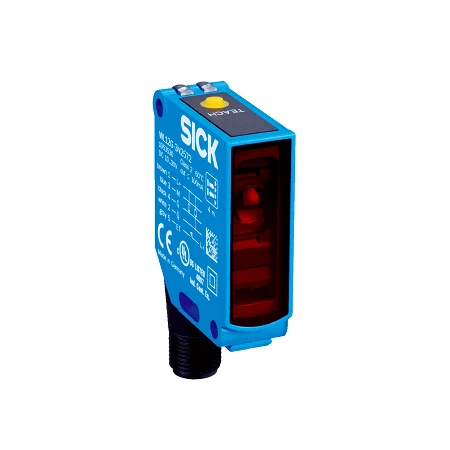
1. Counting separated transparent containers
A conveyor can align the sensor with a PL80A reflector across separated transparent containers. Teach-in establishes the sensitivity for actual production samples within the 0–4 m maximum range. Each container changes the return for external counting logic, while the separate plausibility output supplies a stable-versus-unstable detection reference for evaluating the reliability of the installed optical setup.
Problem Solved
A transparent-container passage signal and a separate stability indication help external counting control track separated products while recognizing when the optical setup no longer provides stable detection.
Transparent containers
Teach-in
Plausibility signal
2. Confirming a transparent carrier at a transfer position
A transfer station handling transparent carriers can teach sensitivity with representative material and the intended reflector alignment. The sensor and PL80A reflector span the expected carrier position within the 0–4 m maximum range. External transfer logic evaluates the PNP signal after carrier position and material variation have been checked, while the separate plausibility output provides an additional detection-stability reference.
Problem Solved
A transparent-carrier presence reference helps external transfer control recognize whether the expected load has reached its position, supporting coordinated upstream release when optical transparency complicates ordinary presence checks.
Carrier presence
Teach-in
Detection stability
3. Monitoring a transparent film feed
A feeder can route transparent film between the sensor and a reflector so the normal web changes the returned light level. Single-button teach-in establishes sensitivity with representative film and alignment conditions. External feeder control evaluates a change toward the unobstructed return as a possible material break, while the plausibility signal provides a separate reference for stable or unstable detection.
Problem Solved
A film-present versus clear-path reference helps external feeder control recognize possible material loss, while the separate plausibility indication helps distinguish stable optical operation from an unstable detection condition.
Transparent film
Material continuity
Plausibility output