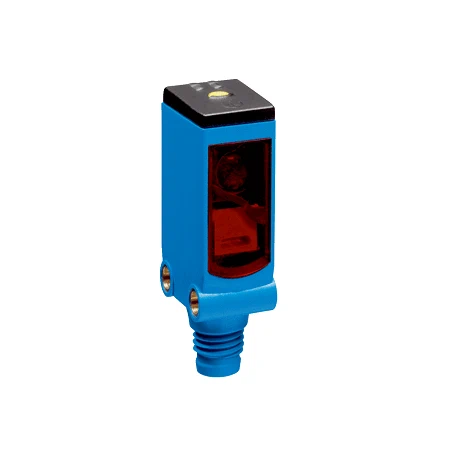
1. Counting transparent containers on a packaging conveyor
A packaging conveyor can align the sensor with a PL80A reflector across the container path. The sensor evaluates the reduced returned light as separated transparent containers cross the beam. External counting logic records the switching transitions. Actual wall material, container shape, attenuation, alignment and available gaps are validated within the 0–3 m sensing range.
Problem Solved
Beam-attenuation events provide external counting logic with a reference for separated transparent containers, helping track product flow where a transparent wall may transmit much of the emitted light.
Transparent containers
PL80A reflector
PNP transitions
2. Recognizing a break in a transparent material web
A material feeder can route a transparent web across the optical path between the sensor and reflector. The sensor distinguishes the attenuated web-present state from the unobstructed reflector return when a break opens the path. External line control evaluates the change against the expected material state, with actual film attenuation, flutter and the selected sensitivity validated during setup.
Problem Solved
A change from the taught material-present return to the clear reflector return identifies a possible web break, allowing external feeder control to respond before subsequent processing runs without material.
Web continuity
Beam attenuation
External line control
3. Monitoring the reflector return before missed counts
A transparent-container line can connect the dedicated alarm output to an external maintenance input alongside the PNP detection signal. The alarm changes when continuous threshold adaptation can no longer accommodate the installed ambient conditions, such as excessive reflector contamination. External control distinguishes this optical-condition warning from an ordinary target passage and can direct attention to the affected sensing point.
Problem Solved
A separate alarm path distinguishes a deteriorating optical return from normal product detection, helping maintenance focus on the sensor or reflector before reduced optical margin disrupts the counting process.
Contamination alarm
Separate pin 2
Optical-condition monitoring