1. AutomatedKioskandReverseVendingMachineVisionIntegration
ConnectsuEyeXSminiatureindustrialcamerastothecentralprocessingunitsinsideconsumer-facingkiosks, automatedtellermachines(ATMs), andreversevendingmachines.
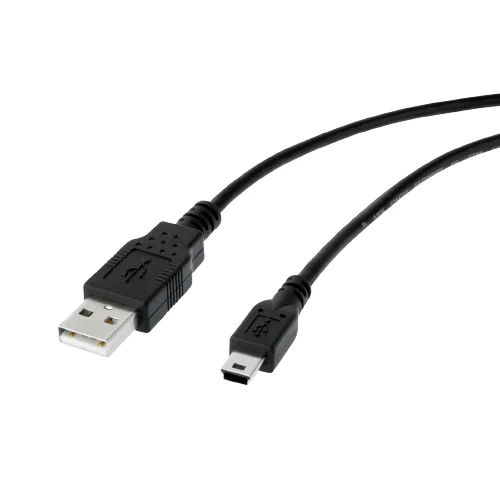
Problem SolvedKiosksrequireembeddedvisionsystemstoidentifyreturneditemsorperformsecuritychecks, butinternalcableroutingexposesdatatoelectromagneticinterference(EMI)fromtouchscreensanddispensingmotors.The3.0mcableprovidesadequatelengthforinternalrouting, whilethedouble-shieldedAWG28/AWG24constructionpreventsEMIsignaldegradationanddeliversstable5VbuspowerviathethickerAWG24wires.Becausekiosksarestationary, thestandard, non-screw-inUSBmini-Bconnectoroffersalow-profileandcost-effectivefitwithoutunnecessarylockingbulk[1.3].
Embedded Vision SystemsKiosk IntegrationReverse Vending MachinesEMI Double ShieldingAWG 24 Power Transmission
2. Laboratory Automation and Benchtop Microscopy
Links USB 2 uEye SE or LE cameras mounted on automated laboratory microscopes to analysis computers positioned off the main testing bench.
Problem SolvedSensitive microscopy requires a completely vibration-free environment, necessitating the removal of cooling-fan-equipped analysis PCs from the immediate optical bench. The 3.0 m cable length successfully bridges this gap. The double-shielded AWG 28 data lines sustain the 480 Mbps USB 2.0 bandwidth required for streaming uncompressed, high-resolution bio-sample images. The lack of lockable or screw-in connectors is ideal for these static, non-vibrating laboratory setups, allowing researchers to quickly hot-swap cameras or reconfigure straight-in connections without tools.
Laboratory AutomationDigital MicroscopyHigh-Framerate Image AcquisitionUSB 2.0 BandwidthStatic Installation
3. Multi-Camera Sports Biomechanics and Motion Analysis
Connects multiple board-level or housed uEye LE cameras to a central synchronization hub in indoor sports studios, such as golf putting analysis simulators.
Problem SolvedMotion analysis studios must position multiple high-speed cameras at various angles around a human subject to capture rapid movements. The 3.0 m cable enables flexible spatial distribution of the cameras back to a central PC. The double-shielded cable design protects the critical USB 2.0 image data from electrical noise generated by high-intensity overhead studio lighting ballasts. The straight, non-lockable connectors are specifically advantageous here, allowing rapid studio setup, tear-down, and angle reconfiguration without dealing with threaded industrial locks.
Sports BiomechanicsMotion Analysis SimulatorsMulti-Camera SynchronizationSignal IntegrityData Pair AWG 28