Description
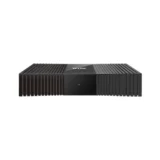
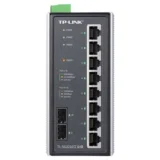
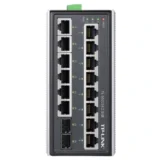
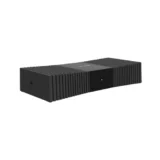
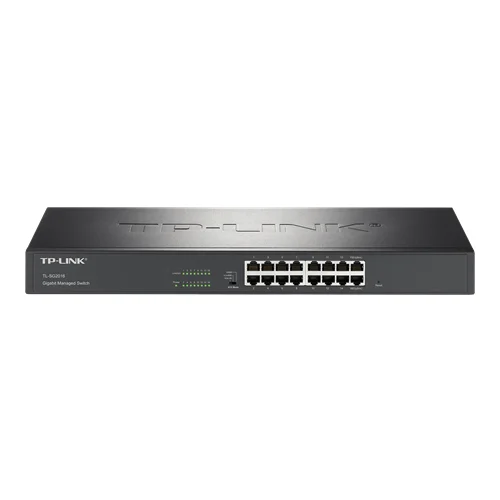
TP-Link TL-SG2016 16-Port Gigabit Cloud Managed Switch
Technical Overview
16-Port Gigabit cloud-managed switch with line-speed forwarding, 3-mode physical switch, L2 network management (VLAN, QoS), and silent fanless design.
Key Features
- 16× 10/100/1000 Mbps RJ45 ports delivering high-speed gigabit wire-speed forwarding
- Three-position physical slide switch supporting hardware-level selection of Cloud/Web Management, VLAN Isolation, and Standard Switch modes
- Comprehensive remote monitoring and centralized cloud setup via the TP-LINK Commercial Cloud Platform and mobile app
- Robust Layer 2 network management features including 802.1Q VLAN, MTU VLAN, and Port VLAN configurations
- Advanced Quality of Service (QoS) based on Port, 802.1p CoS, and DSCP priority queuing
- Enhanced network reliability with Loop Detection, Cable Diagnostics, Storm Control, and Link Aggregation (Trunking)
- Fanless silent hardware design in a standard rack-mountable steel chassis
Technical Specification Matrix
| Parameter | Value |
|---|---|
| Interface | 16× 10/100/1000 Mbps RJ45 Ports |
| Switching Capacity | 32 Gbps |
| Packet Forwarding Rate | 23.8 Mpps |
| MAC Address Table | 8K |
| Hardware Switch Modes | Cloud Management/Web, VLAN Isolation, Standard Switching |
| Power Supply | 100–240 VAC, 50/60 Hz |
| Cooling System | Fanless (Passive Cooling) |
| Operating Temperature | 0°C to 40°C |
| Storage Temperature | -40°C to 70°C |
| Operating Humidity | 10% to 90% RH non-condensing |
| Physical Weight (kg) | 0 |
| Dimensions L x W x H (cm) | 44 x 18 x 4.4 |
Industrial Applications
1. Campus and Hotel Network Distribution Access
Deploying the switch at the network access layer of hotels, dormitories, or multi-tenant properties to supply fast local uplinks while protecting tenant privacy.
Eliminates cross-room snooping and localized broadcast storms by utilizing the physical slide switch's VLAN Isolation mode, which logically isolates ports 1-14 from one another while restricting their communication strictly to uplink ports 15 and 16.
2. Enterprise Security Camera Network Aggregation
Aggregating multi-channel IP-based surveillance video feeds and streaming them to a central Network Video Recorder (NVR) over a non-blocking gigabit infrastructure.
Eradicates packet drops and frame latency issues during periods of high network load by utilizing port-based, 802.1p, and DSCP-based QoS policies to prioritize high-bandwidth video traffic over generic office data traffic.
3. Remote Branch Office Unified Network Management
Providing local network backbones for retail stores, satellite clinics, or branches without dedicated on-site IT technicians.
Reduces operational downtime and the need for expensive physical call-outs through central cloud integration. Off-site IT teams can perform zero-touch deployment, check cable health, and monitor port diagnostics through the Commercial Cloud platform.